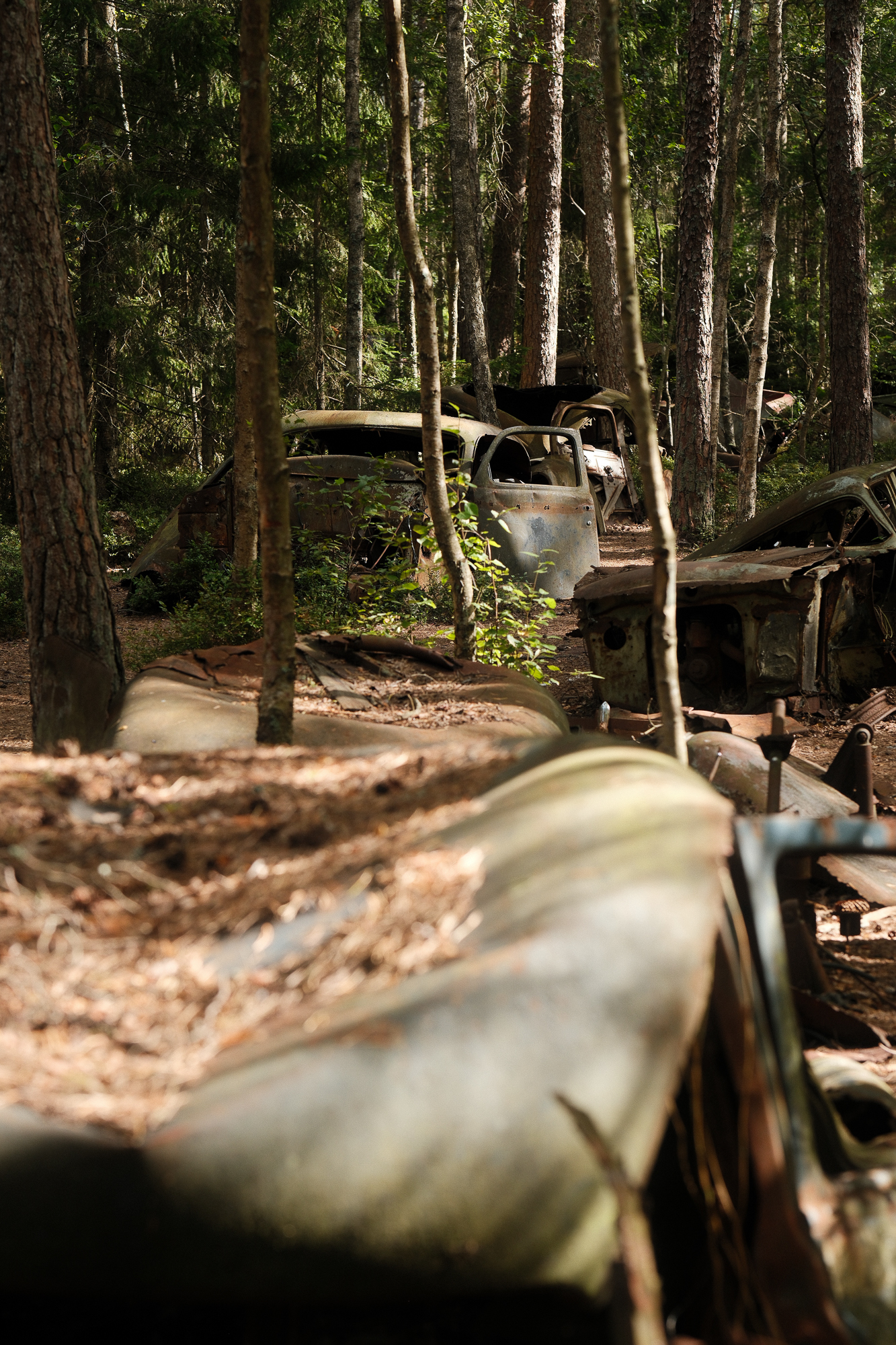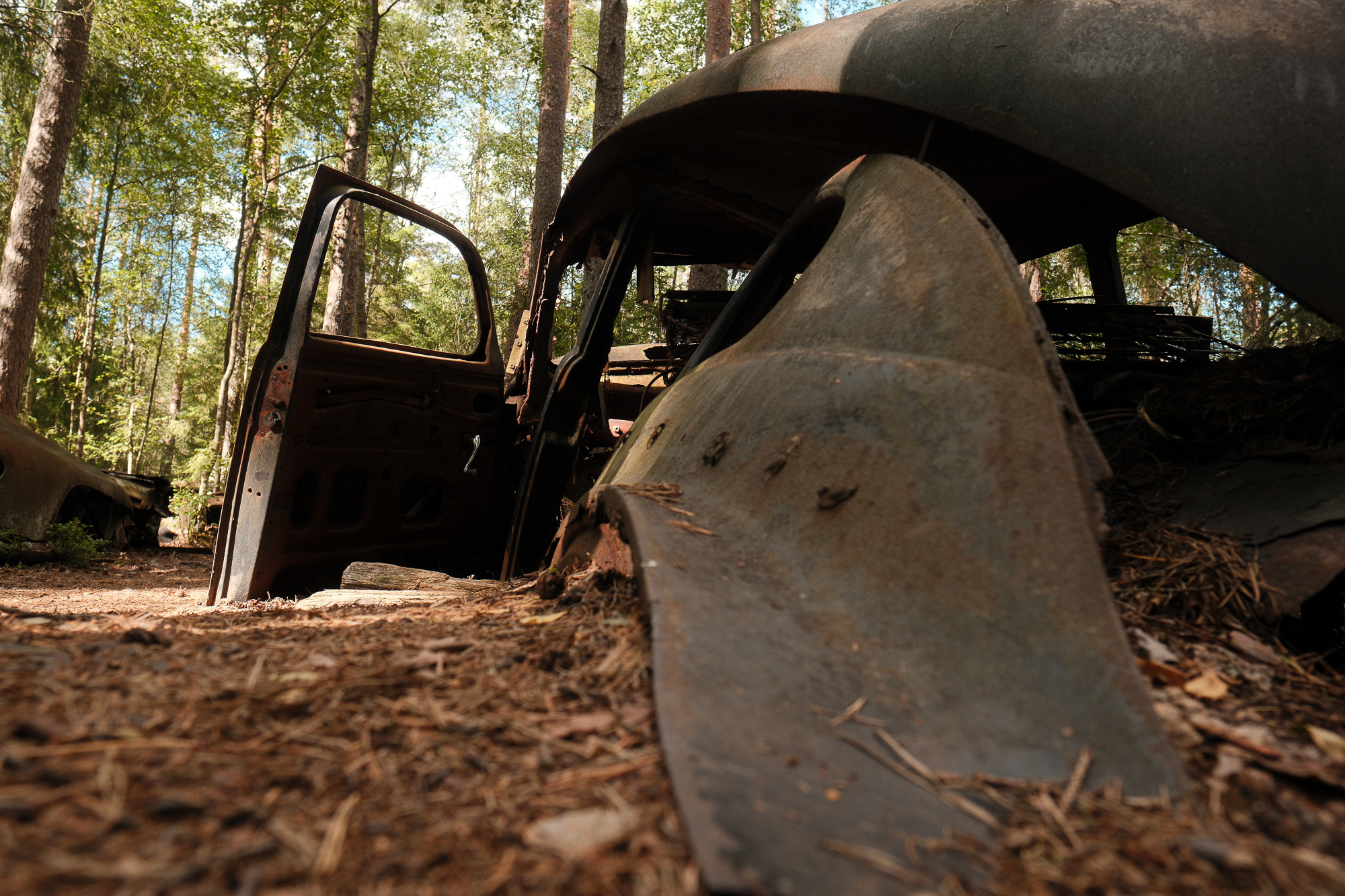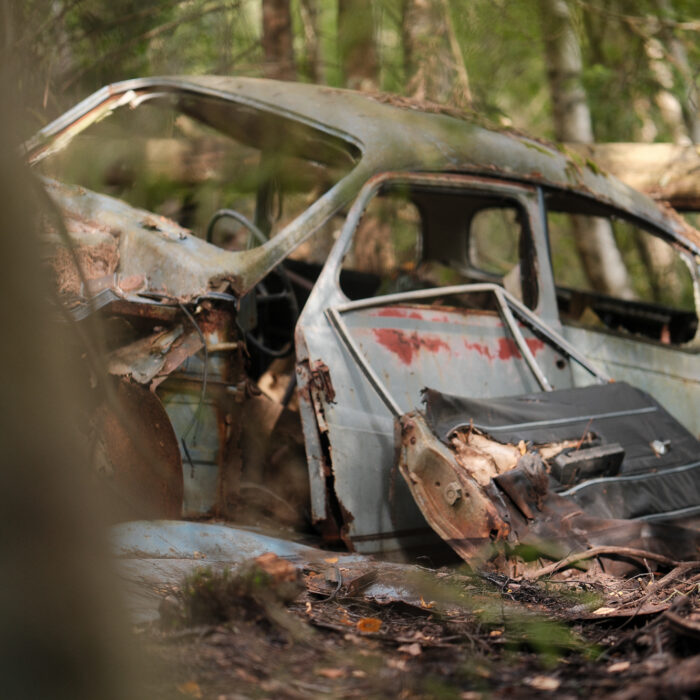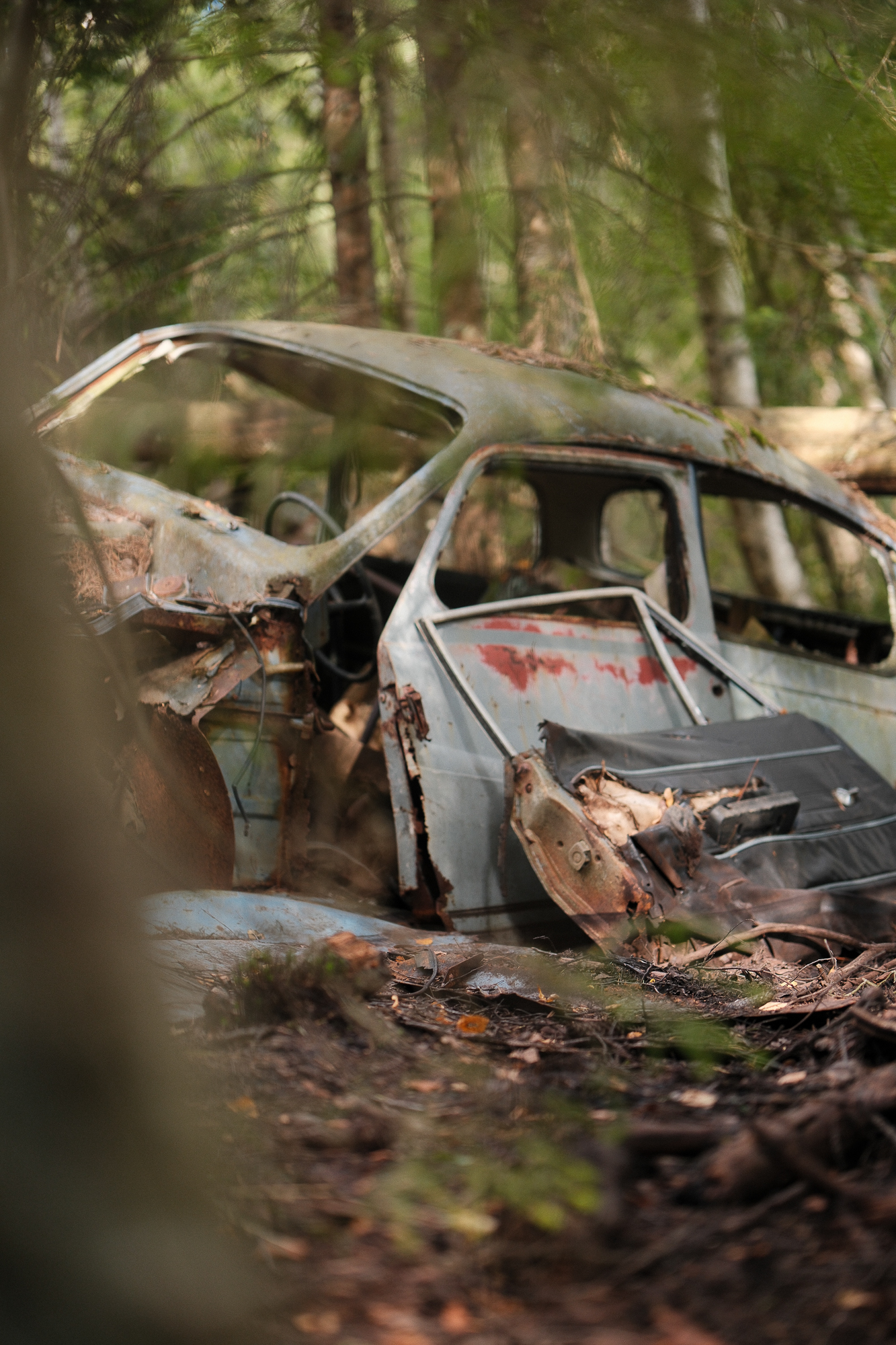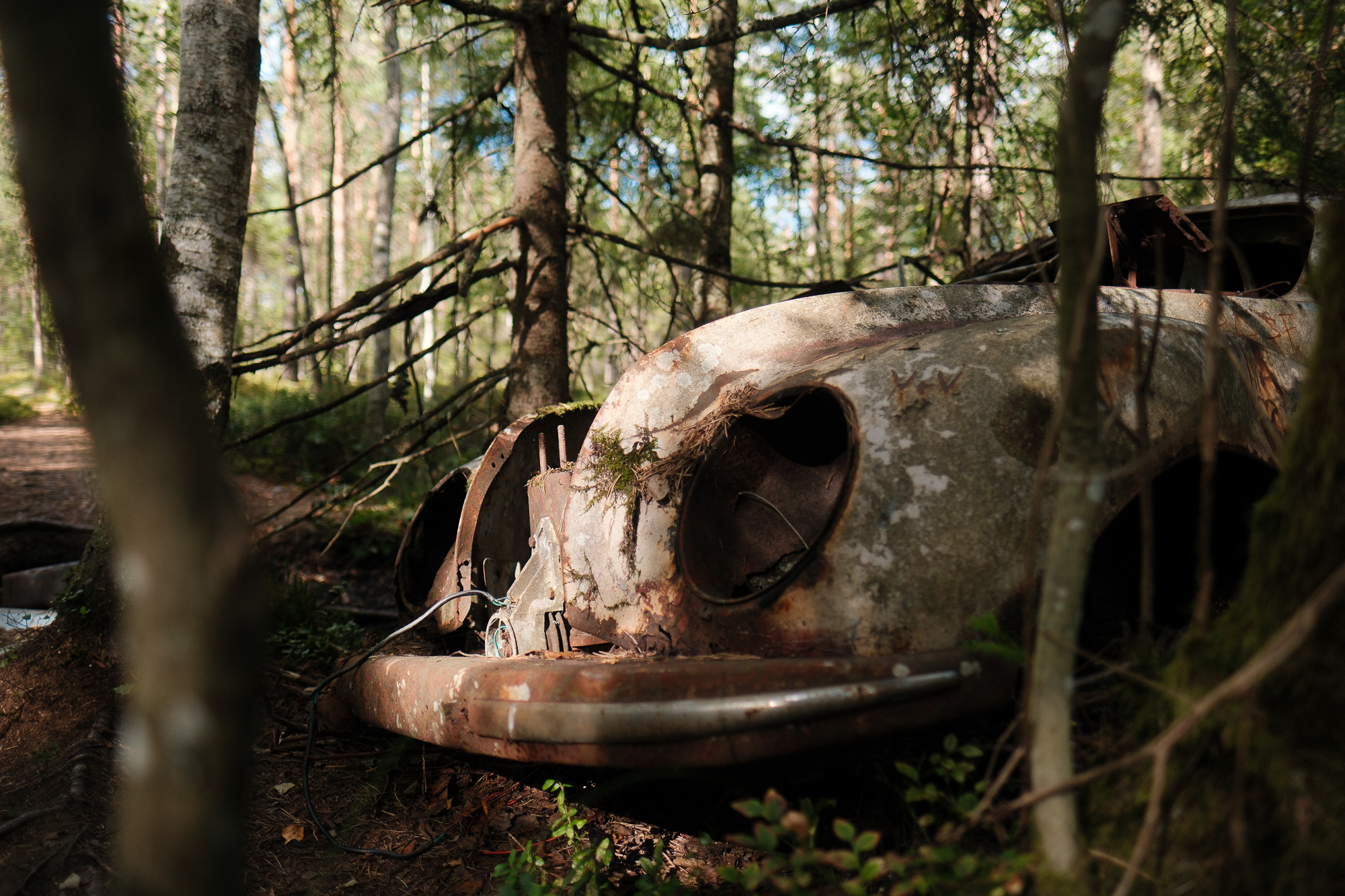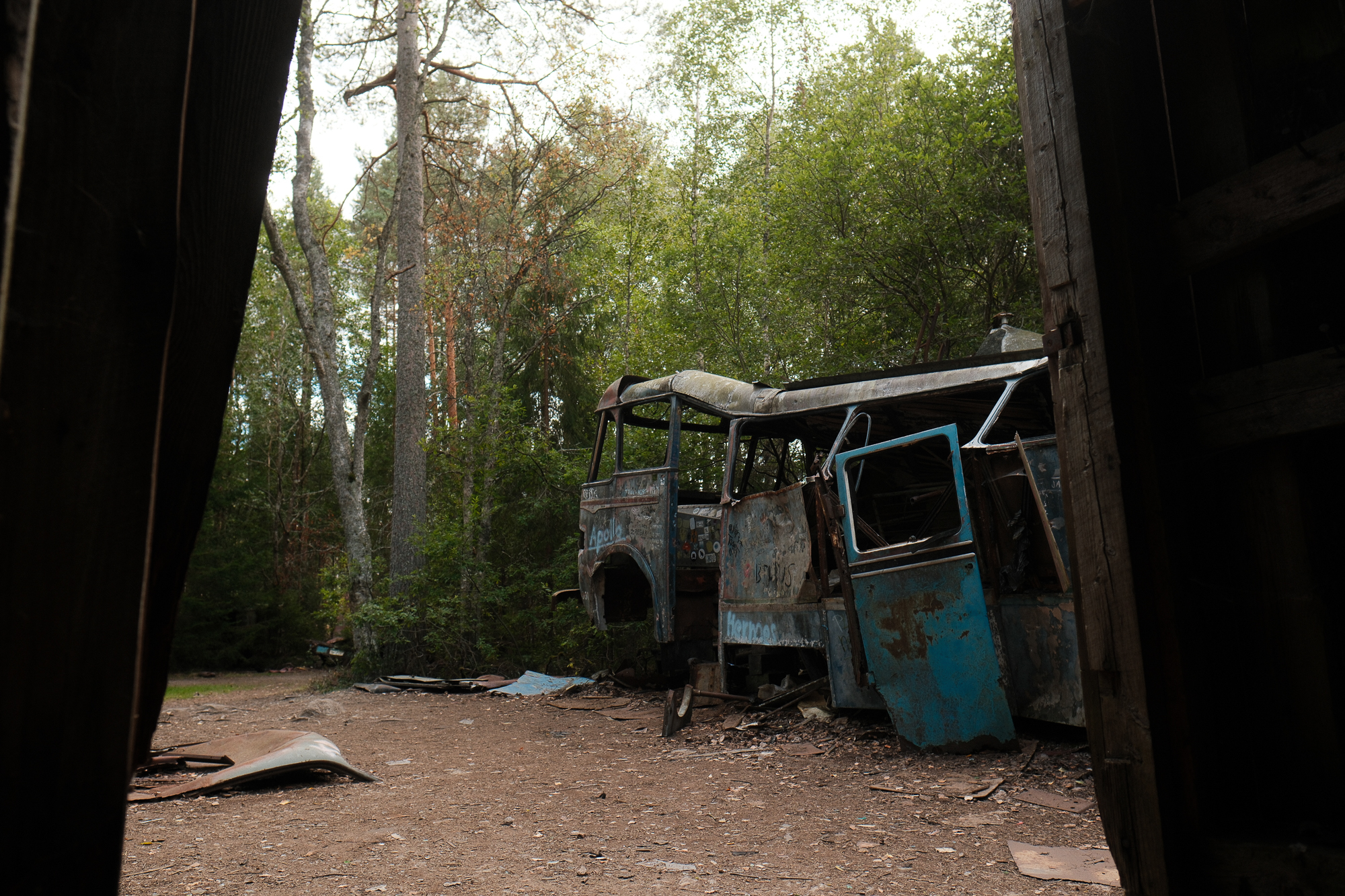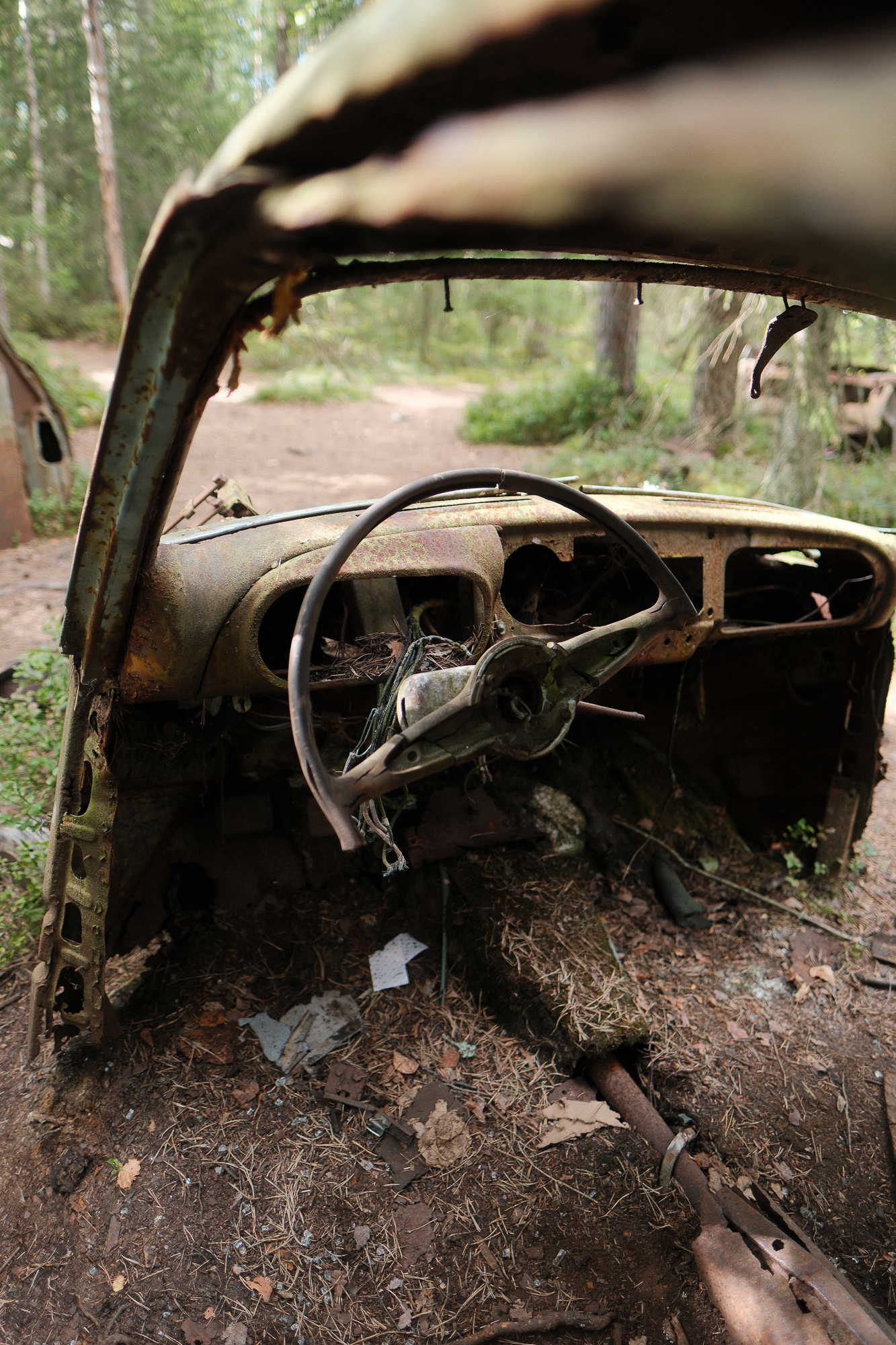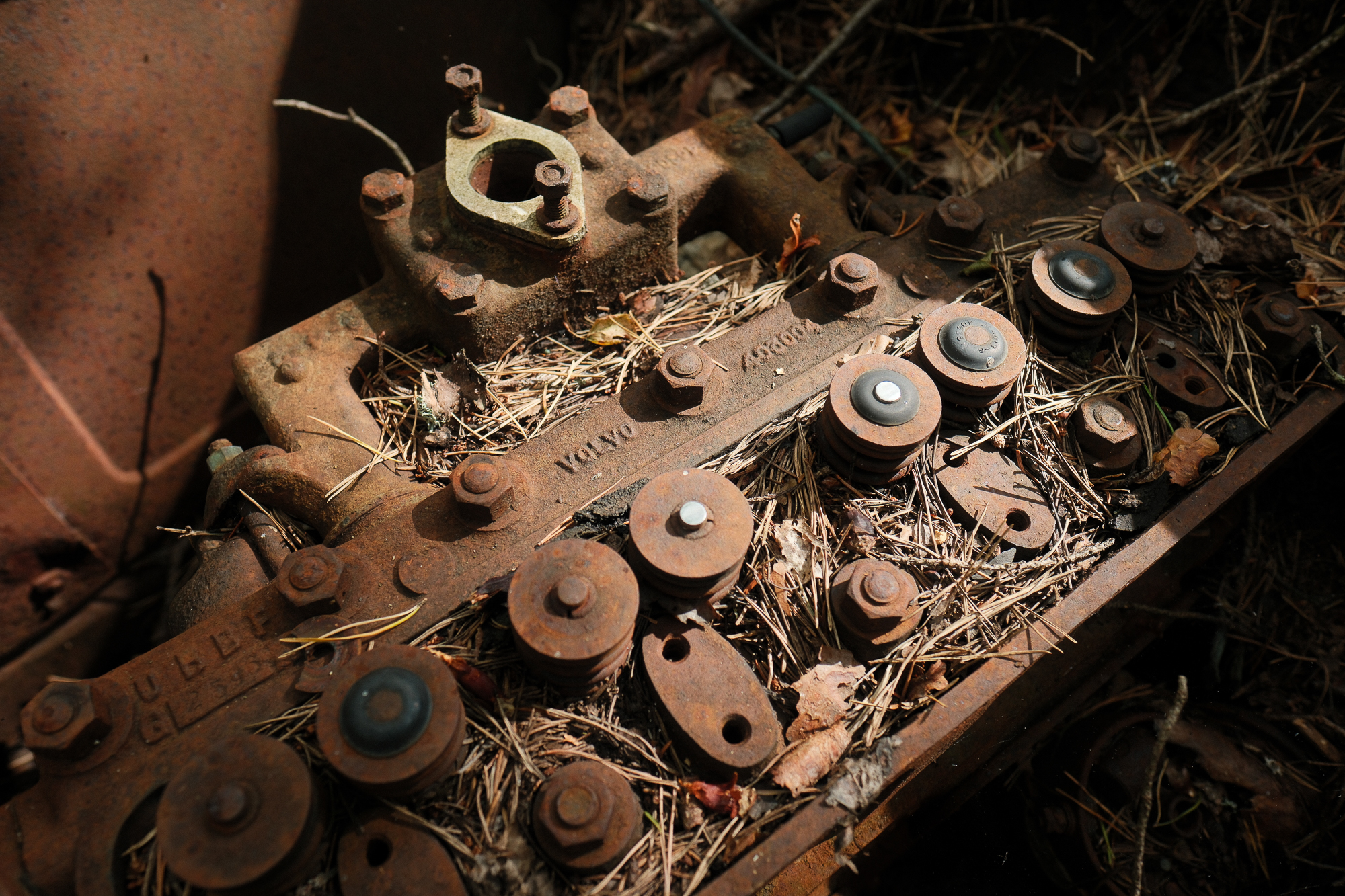
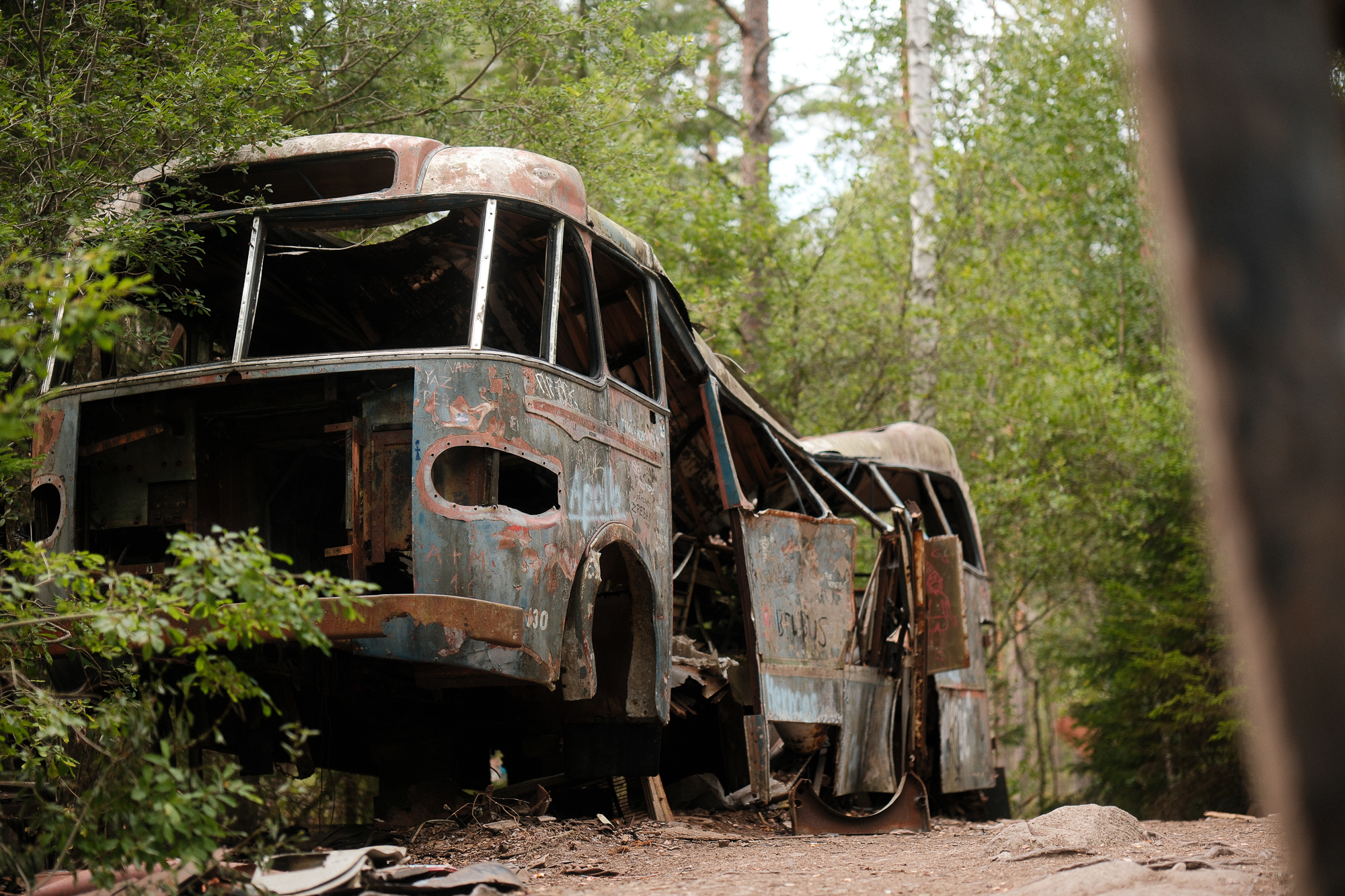
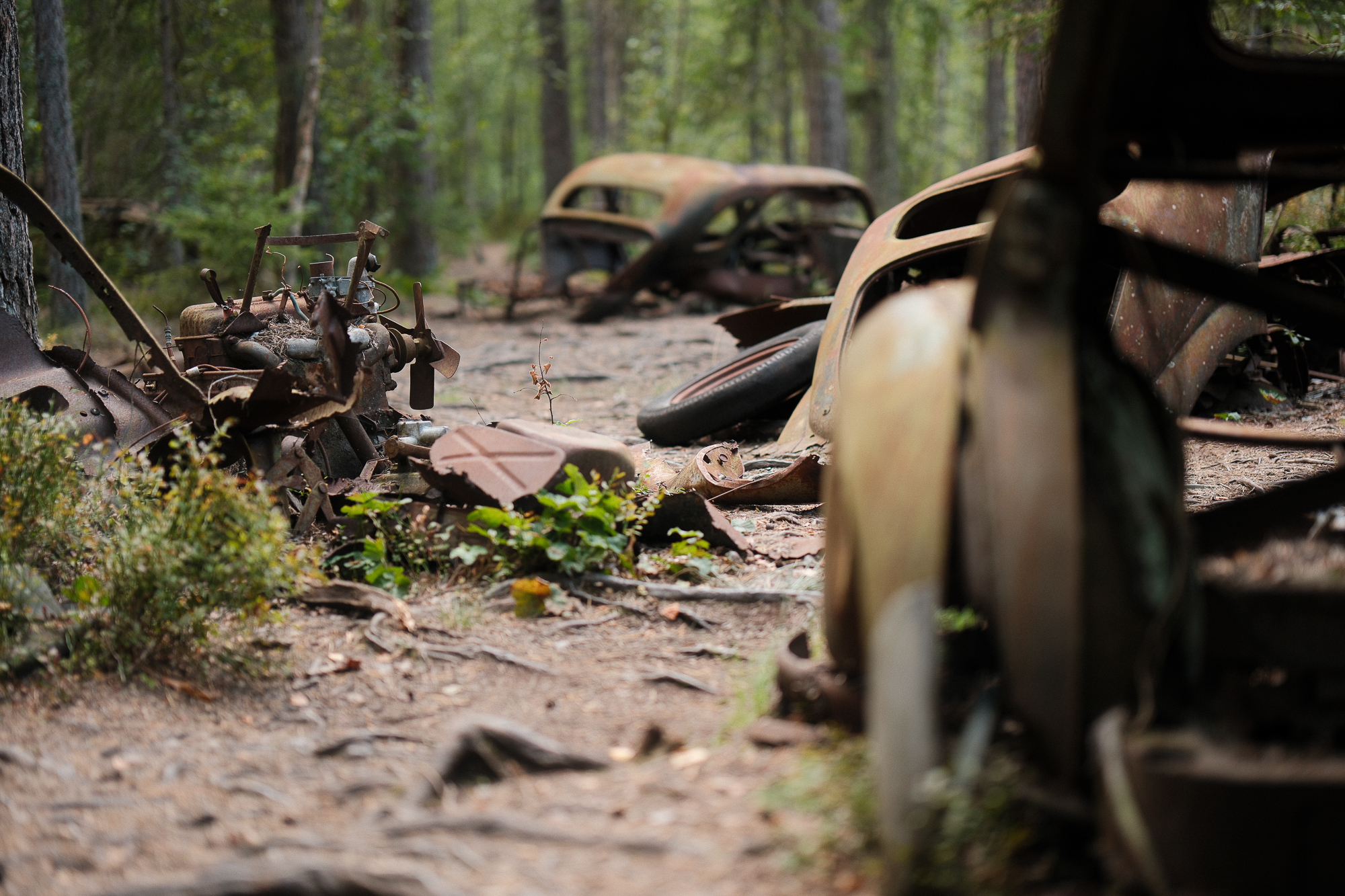
I visited Bilkyrkogården Kyrkö Mosse (“The Car Cemetery of Kyrkö Mosse”) this August, during a road trip through southern Sweden. It wasn’t planned as a major stop—just one of those places you mark on the map because it looks odd enough to be interesting. But the moment I stepped out of the van and walked into the forest, I realized this wasn’t just another curious detour. It’s a place where time has its own logic, where everything is slowly collapsing but somehow still alive.
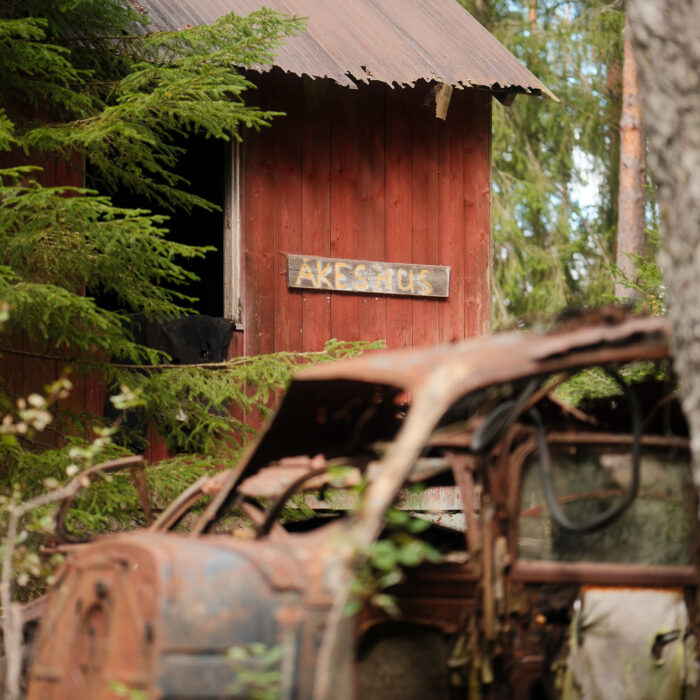
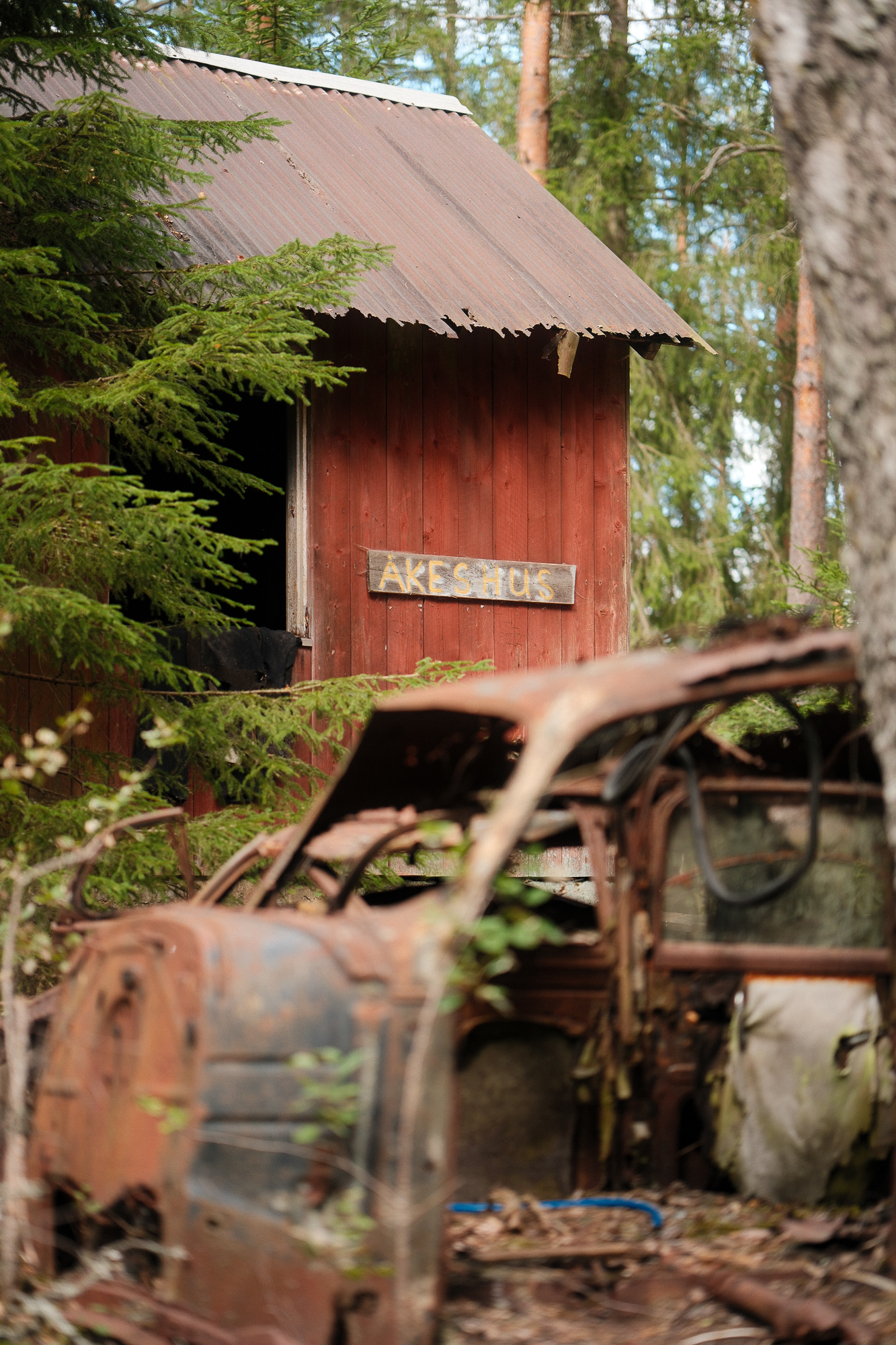
The story of Kyrkö Mosse starts with Åke Danielsson, a man who ran a peat quarry here starting in the 1930s. As part of the operation, he brought in old cars—wrecks, leftovers, machines nobody needed anymore. Some he dismantled for parts, others he used until they simply stopped working. Eventually, when the business died and Åke grew older, the cars were left scattered around the bog. No big narrative, no dramatic ending—just a slow abandonment that stretched over decades.

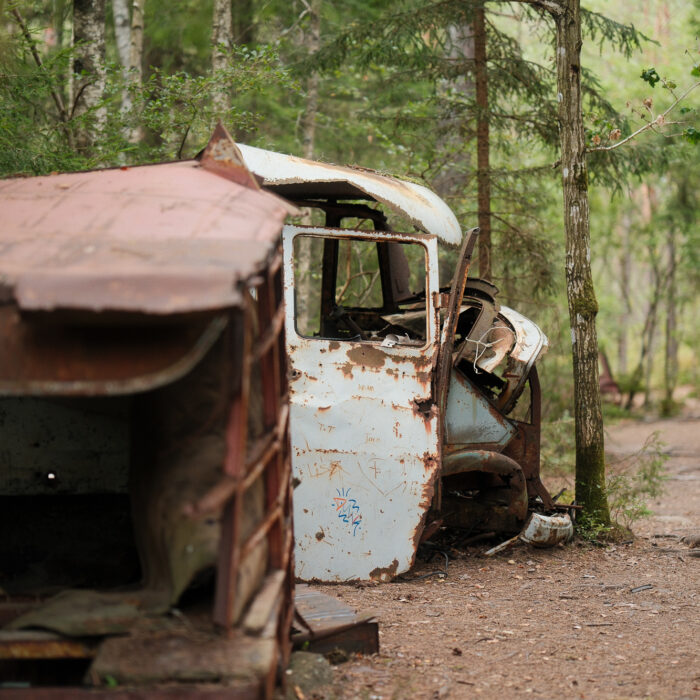
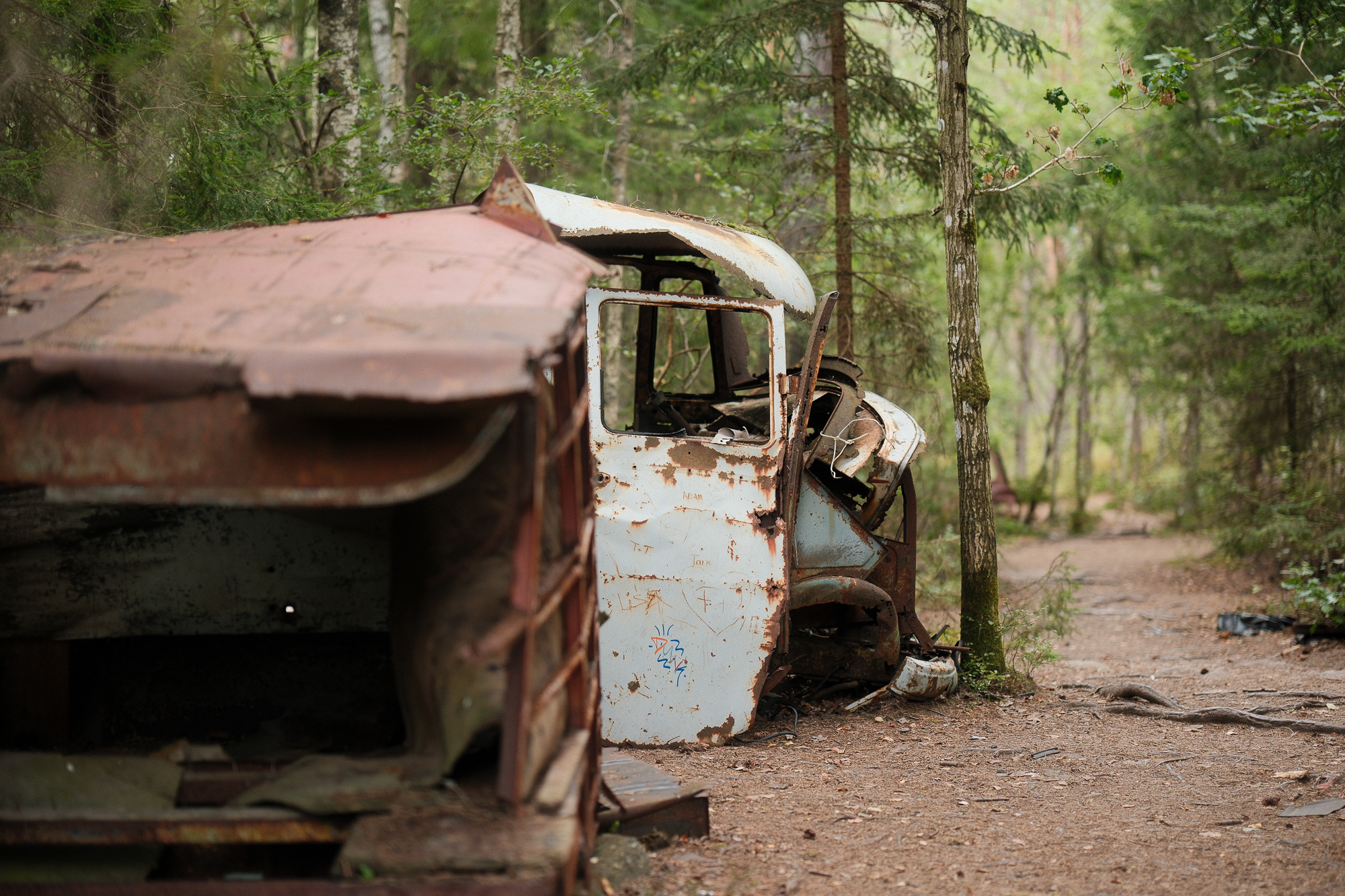
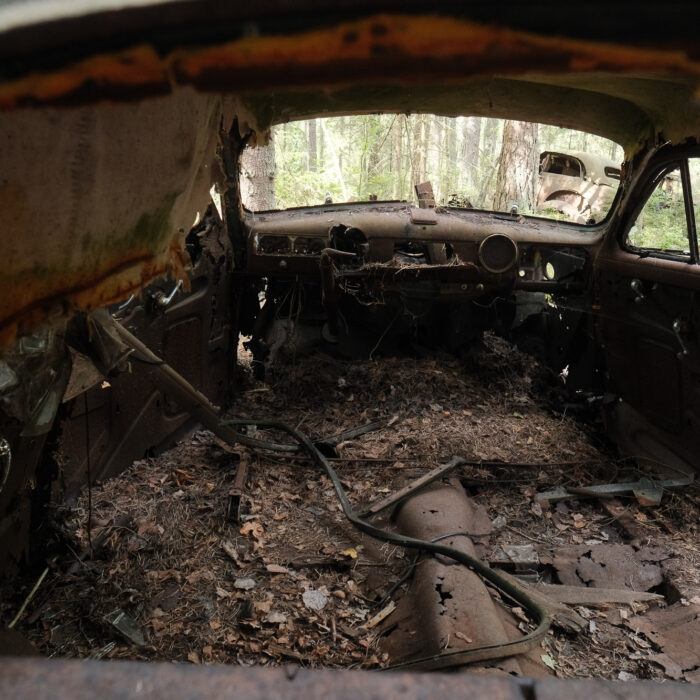
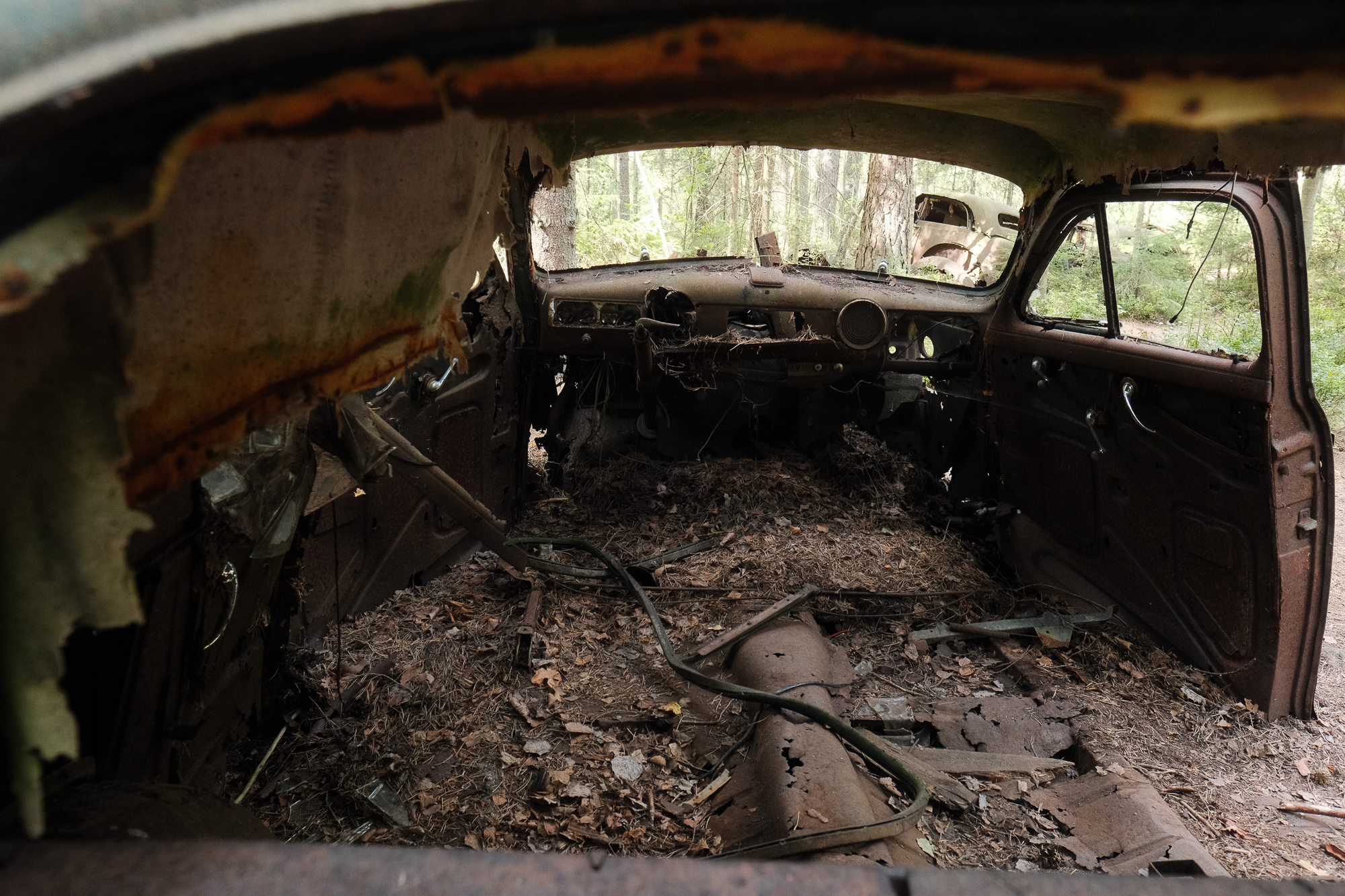
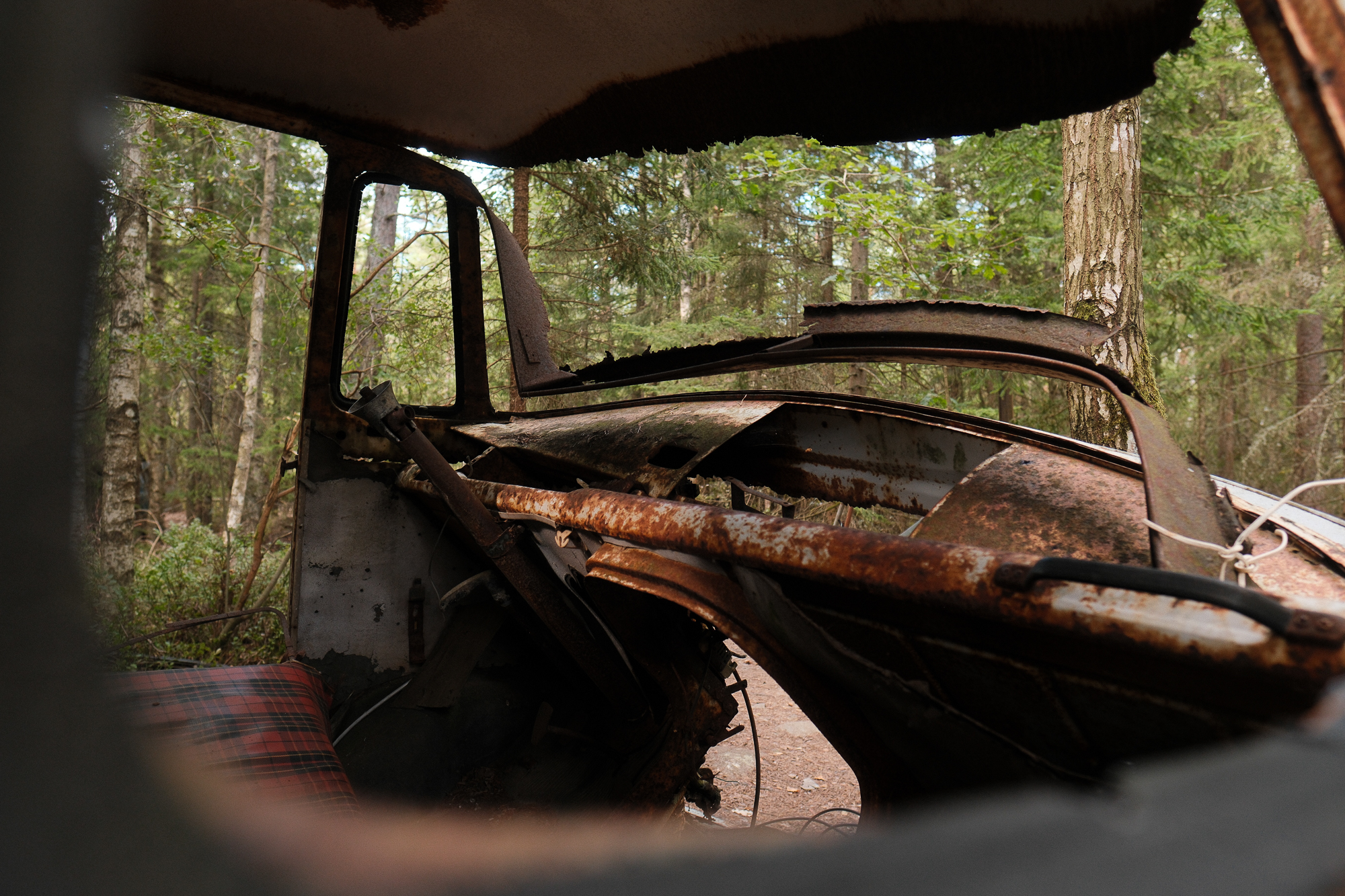
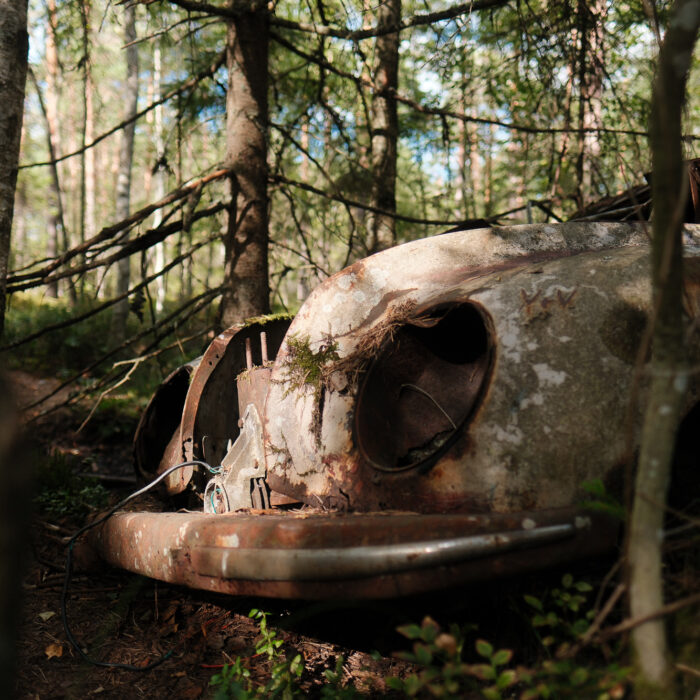
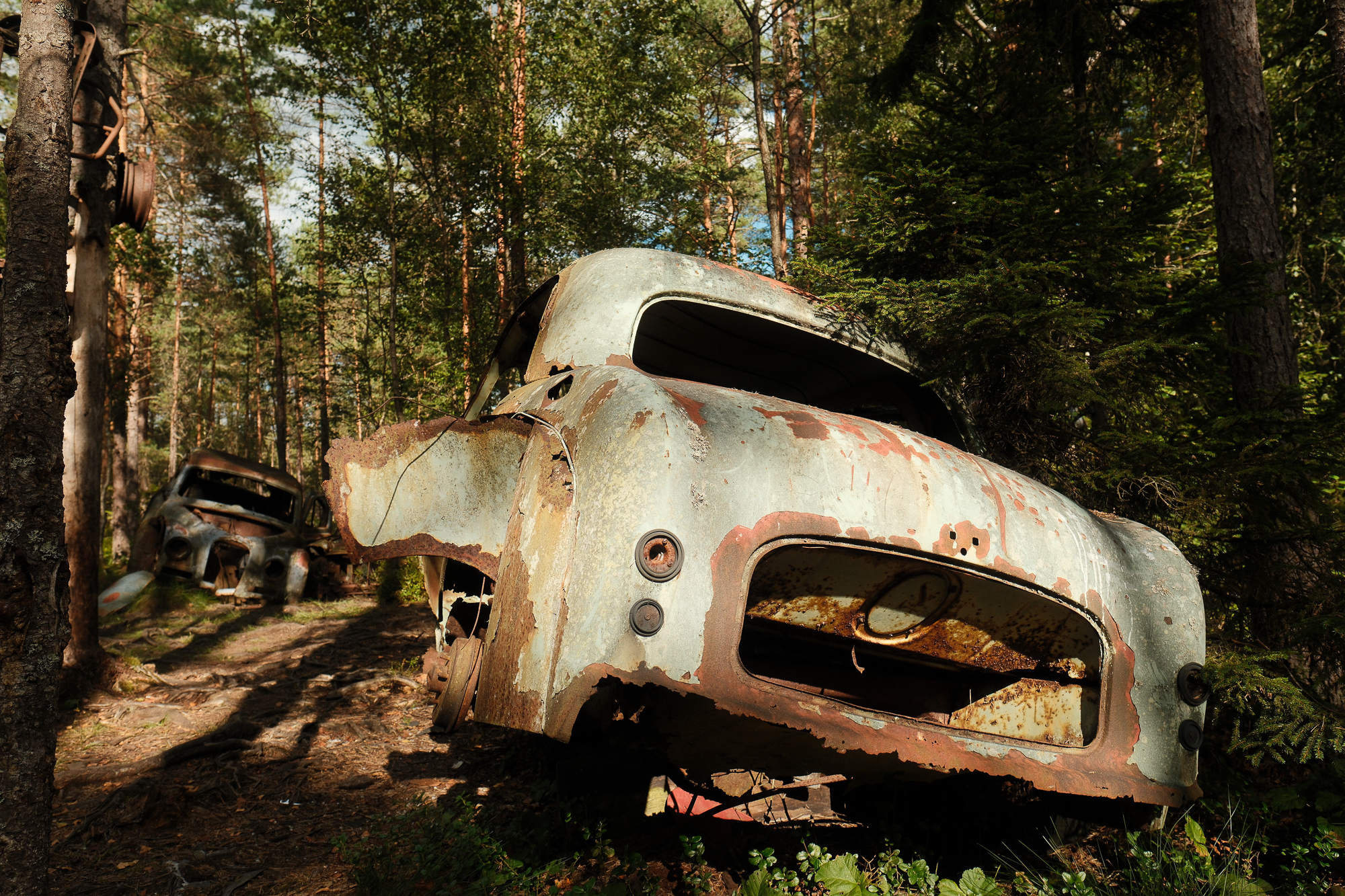
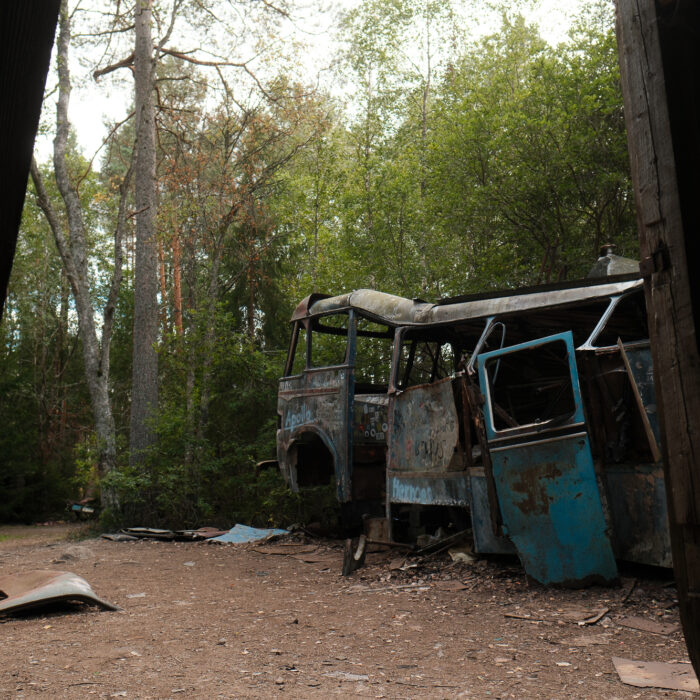
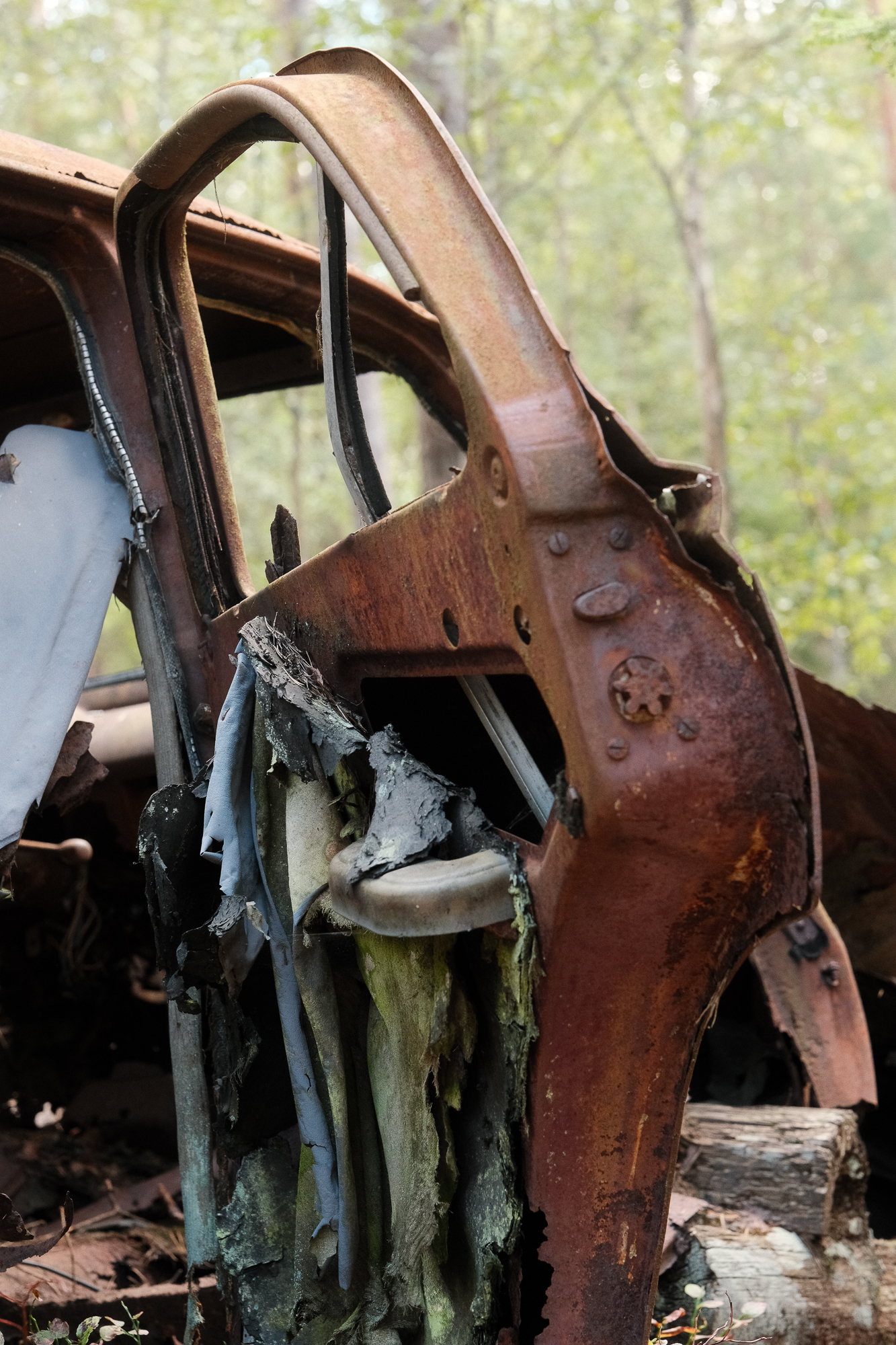
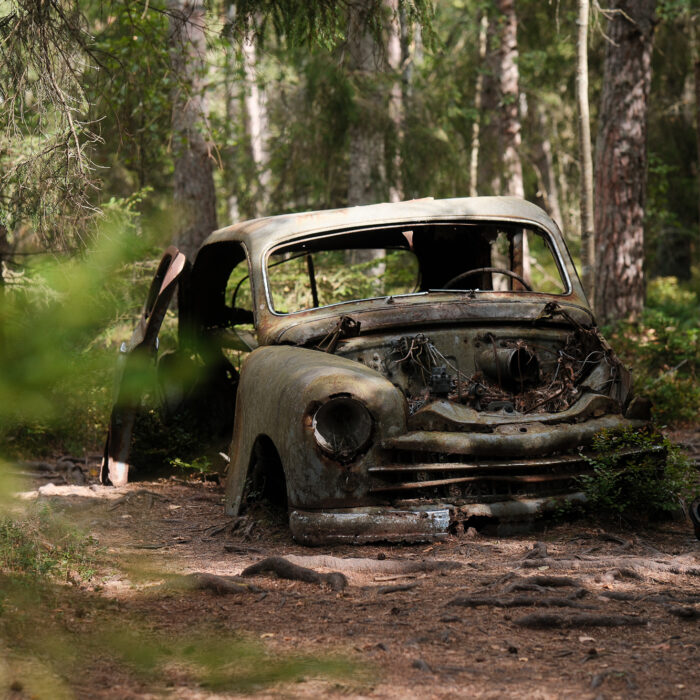
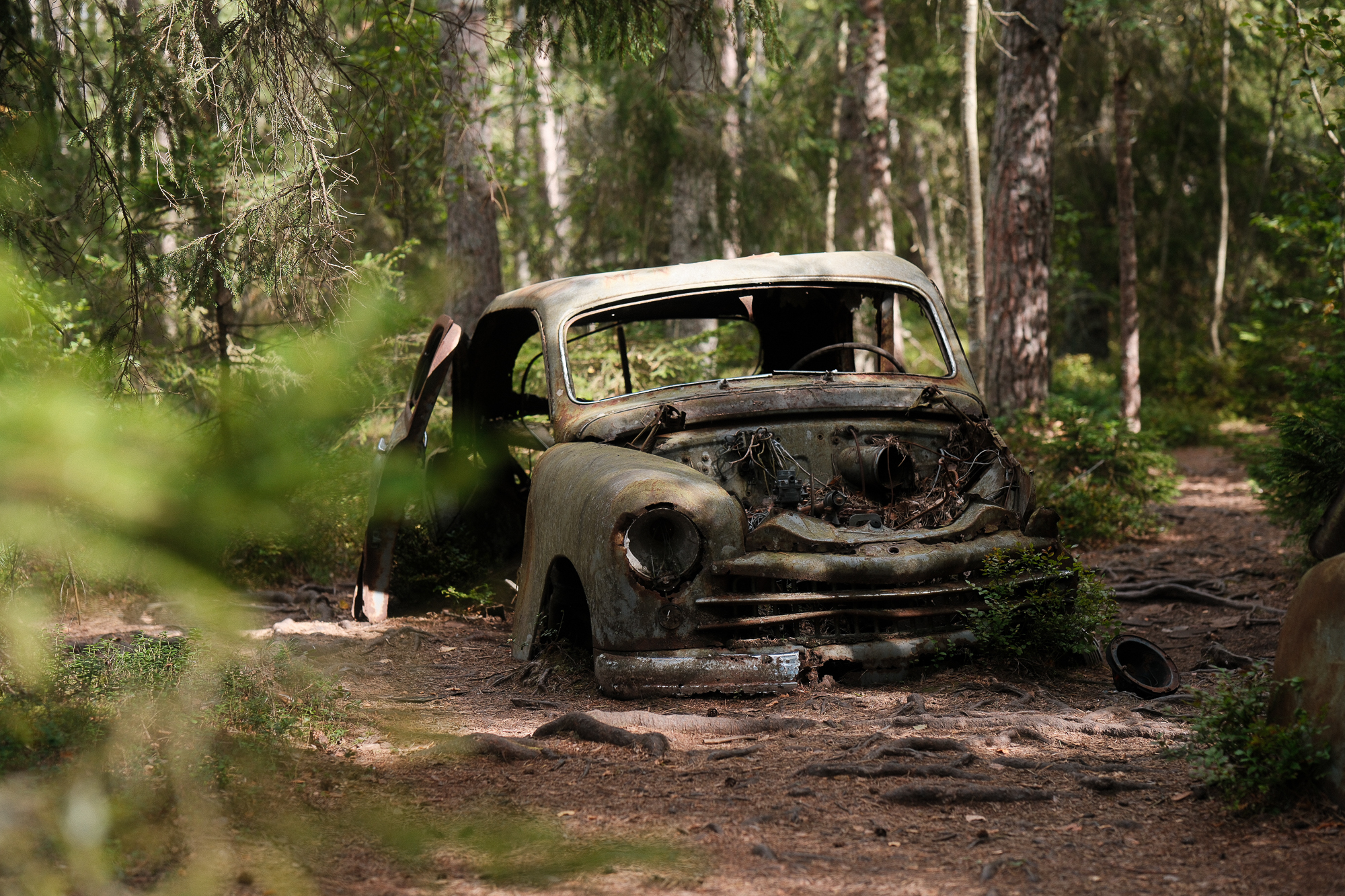
the “car cemetery.” Around a hundred vehicles, maybe fewer now, sinking gradually into the ground. Nature is doing the rest: swallowing doors, peeling paint, splitting metal. The forest isn’t fighting the cars—it’s quietly digesting them.
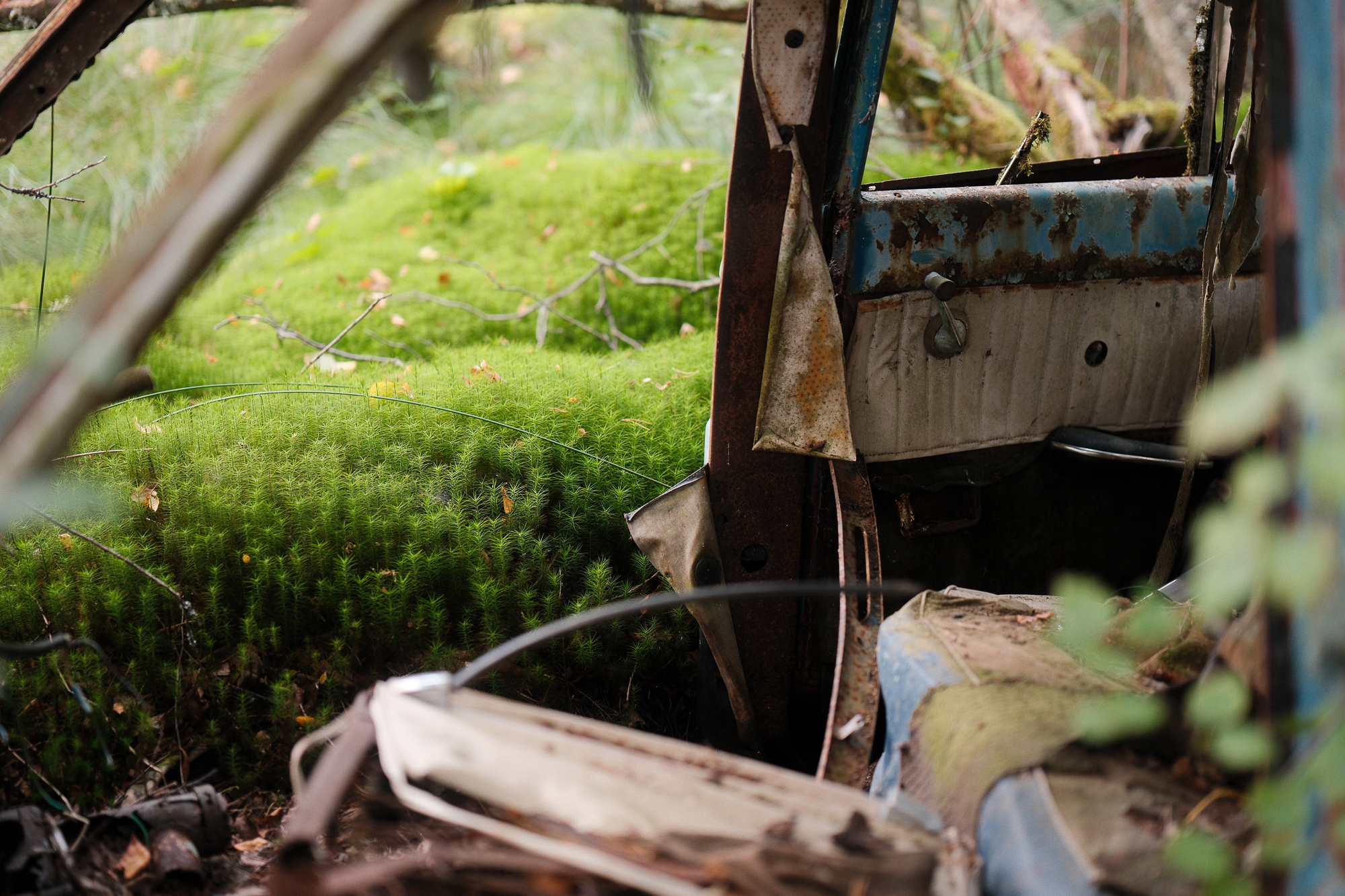
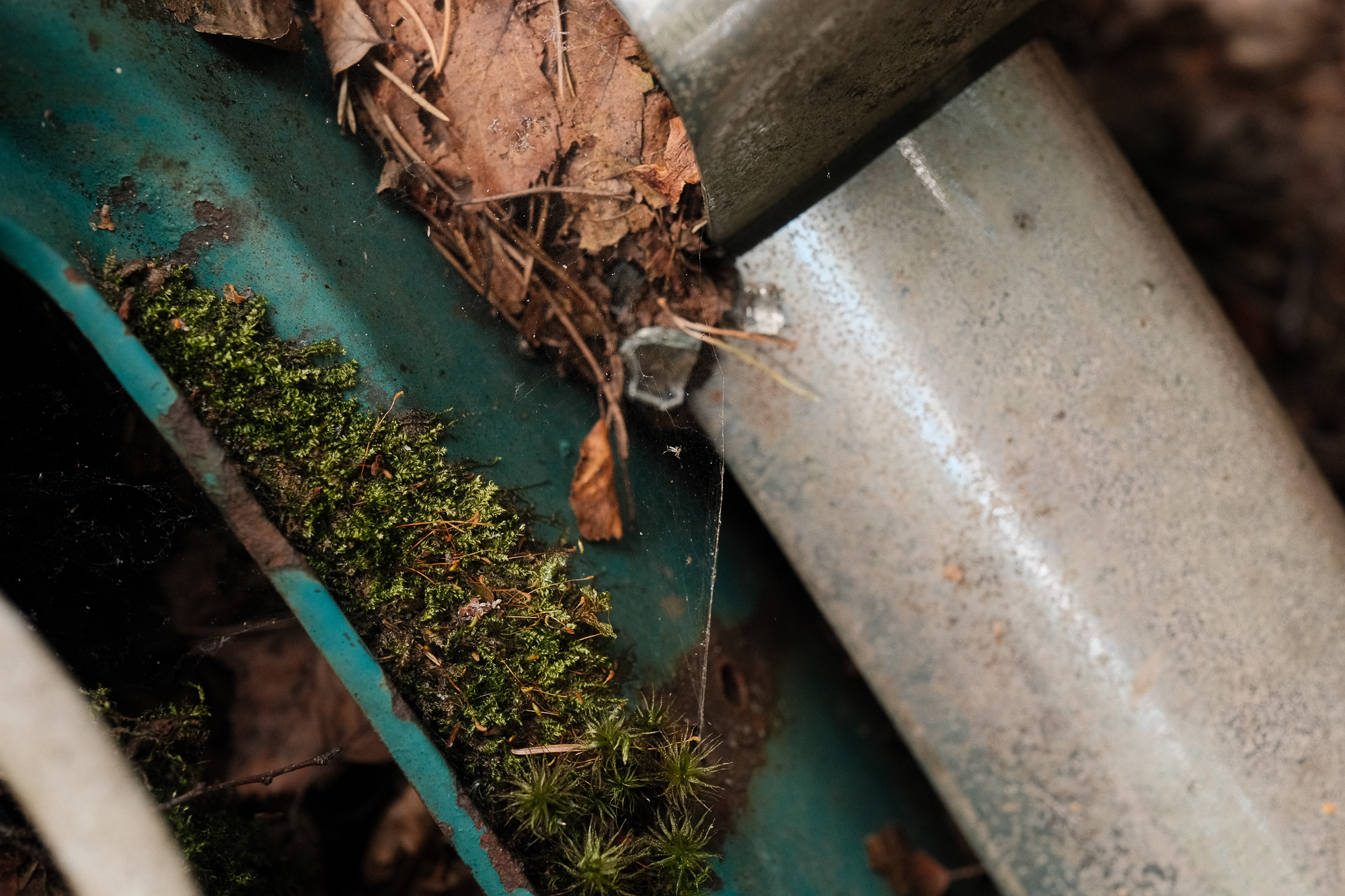
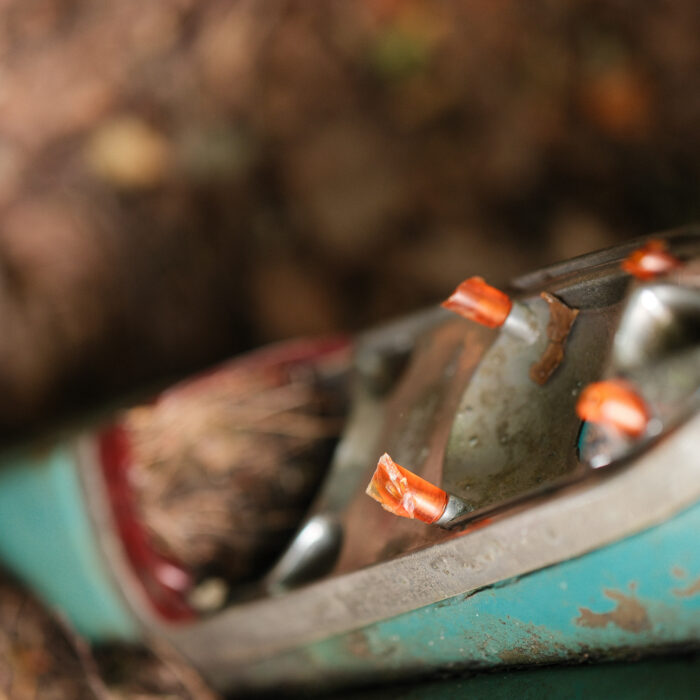
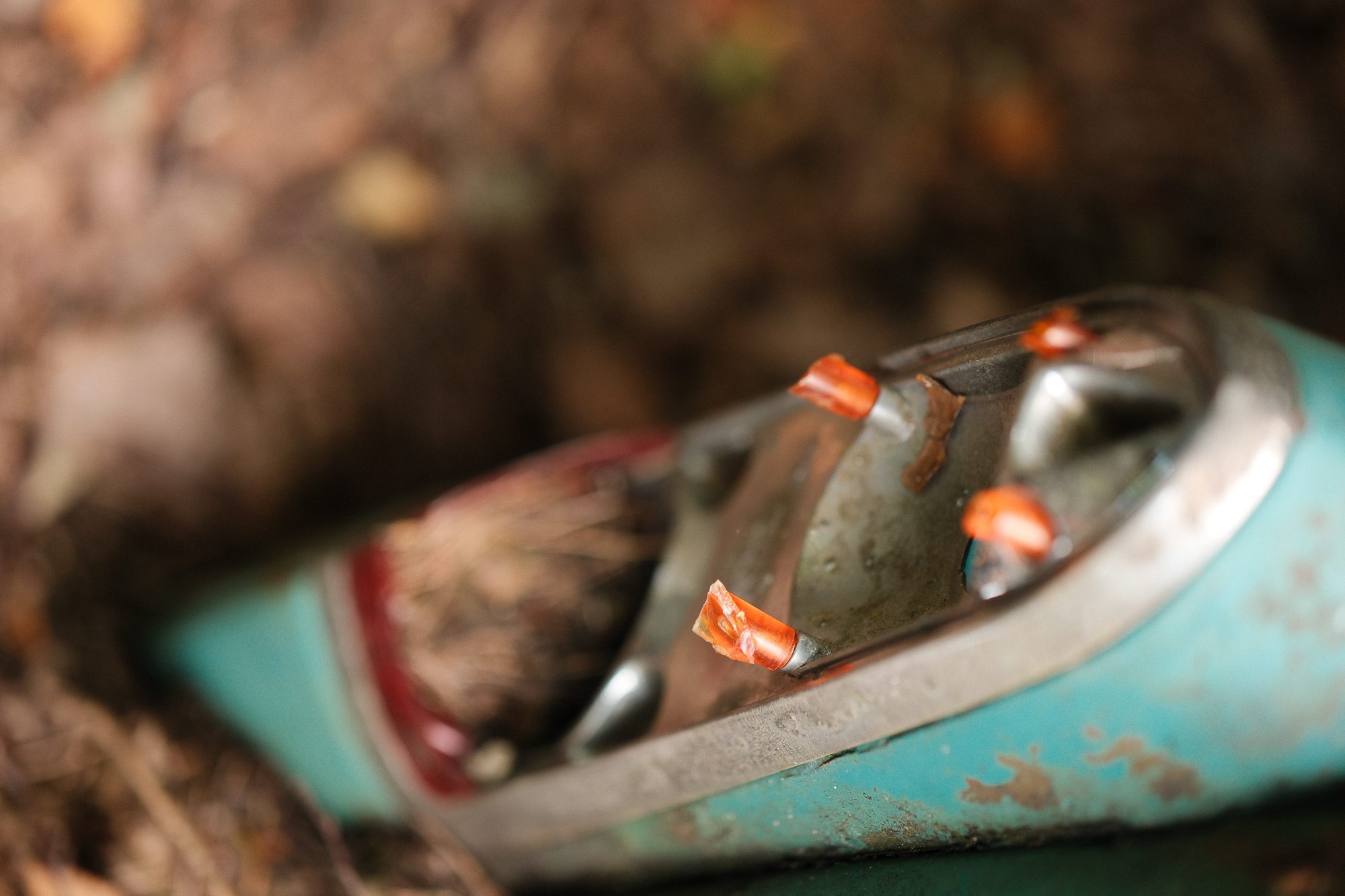
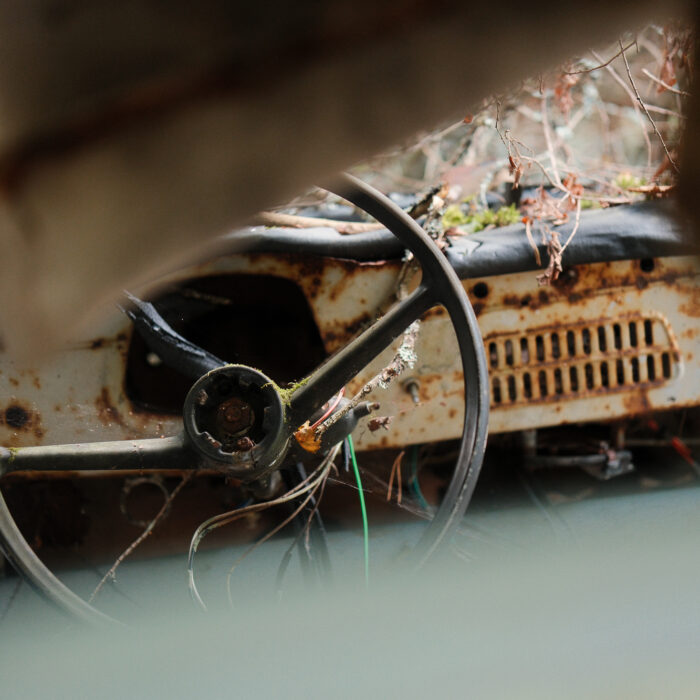
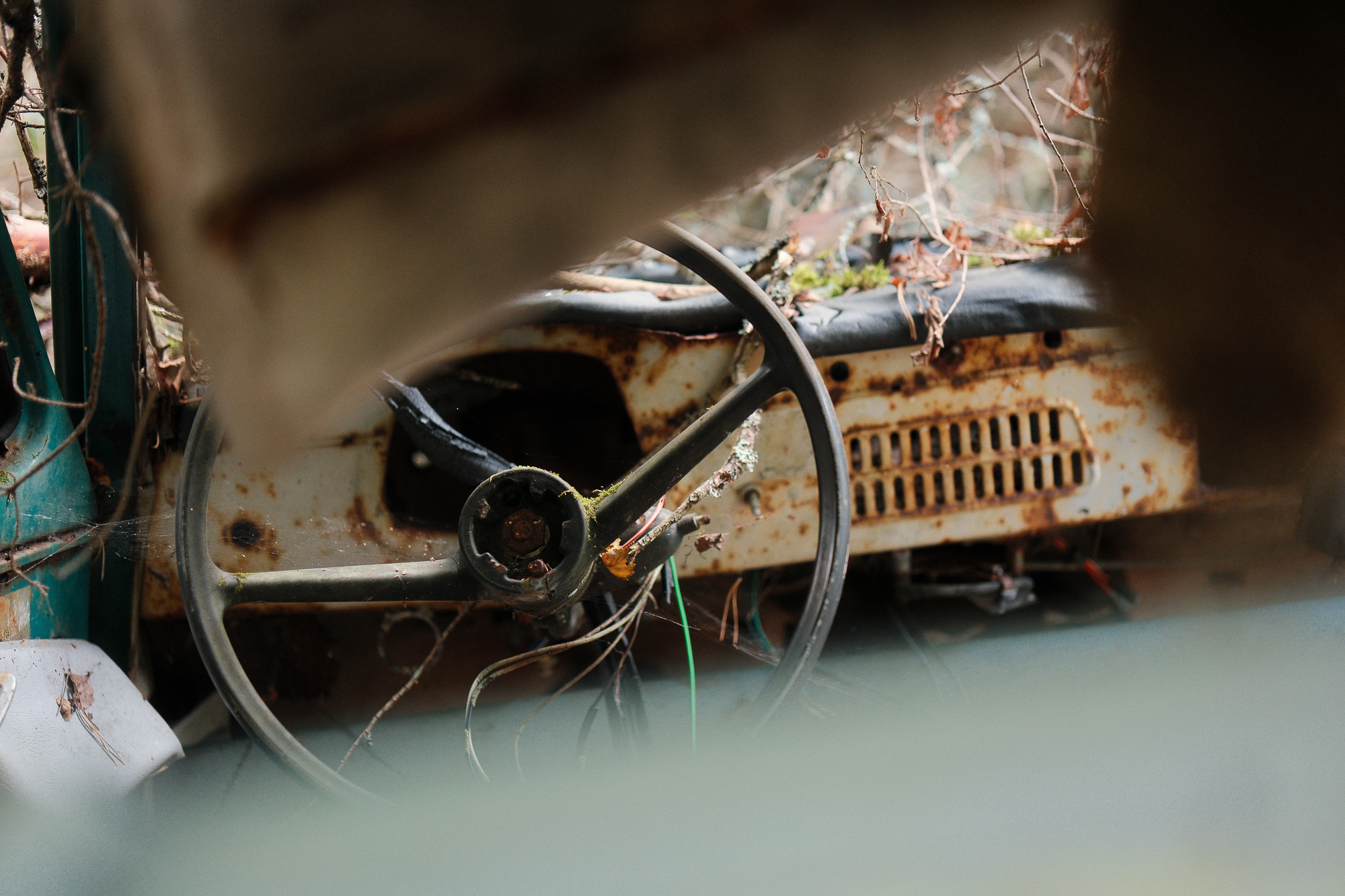
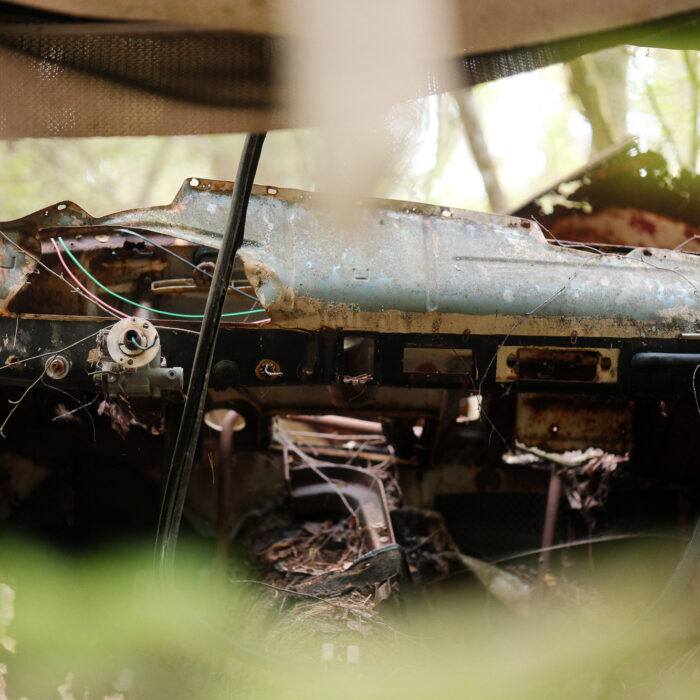
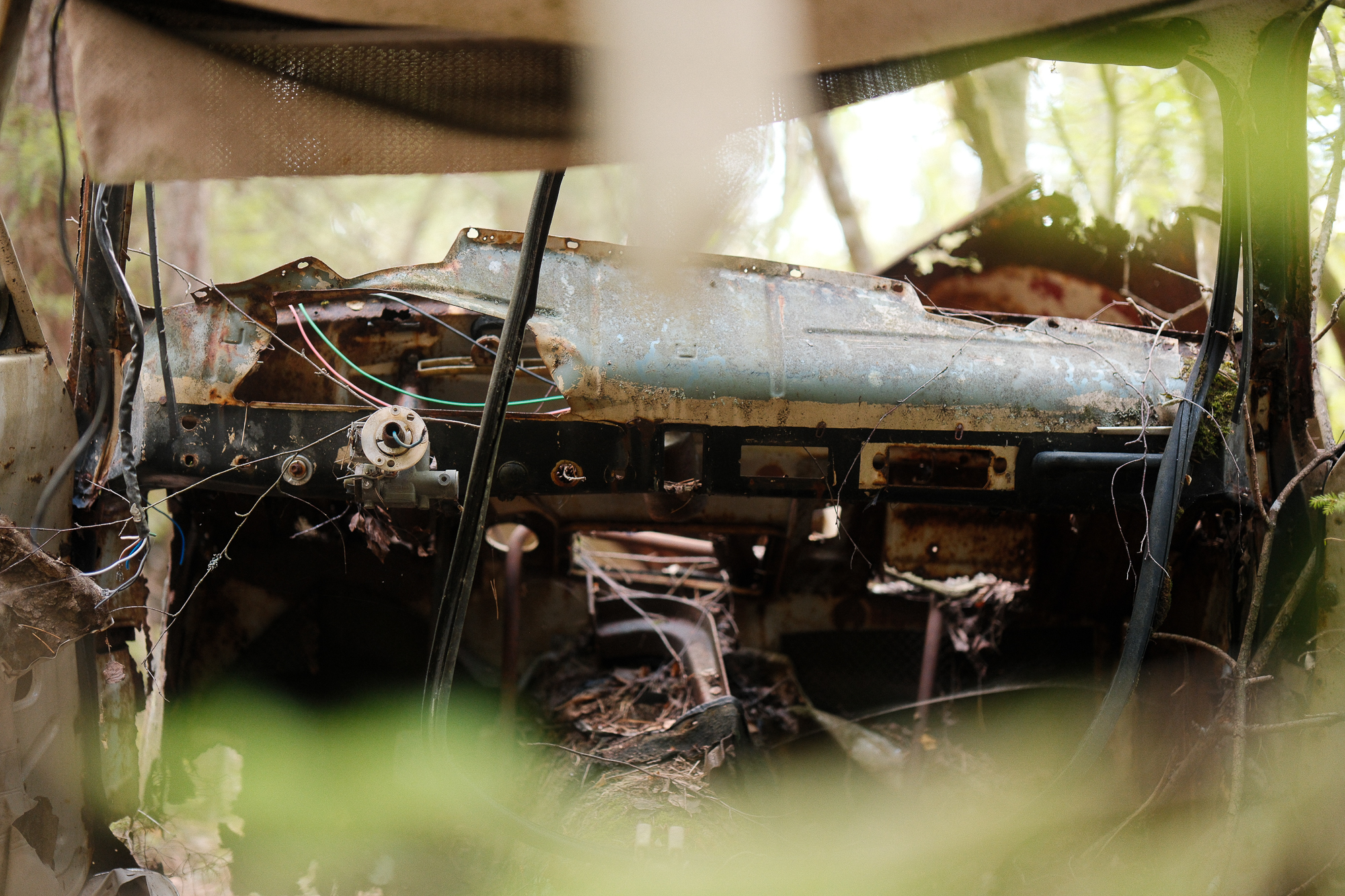
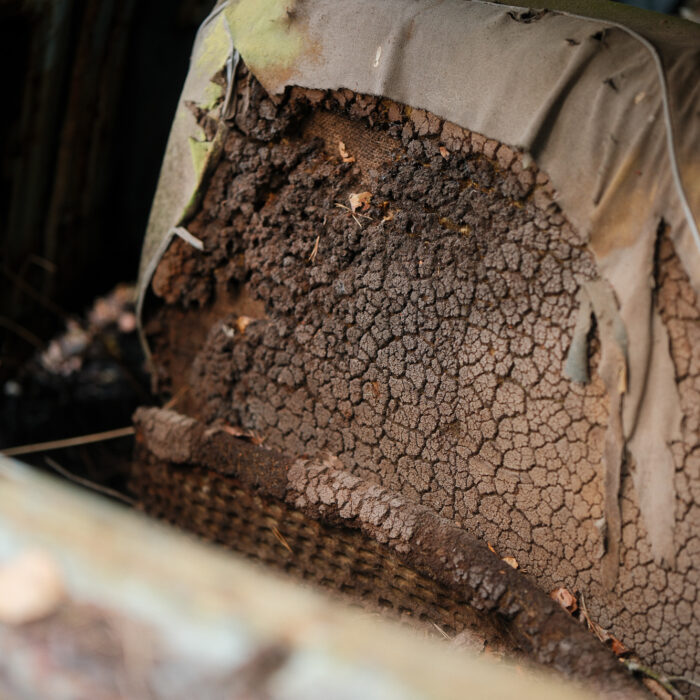
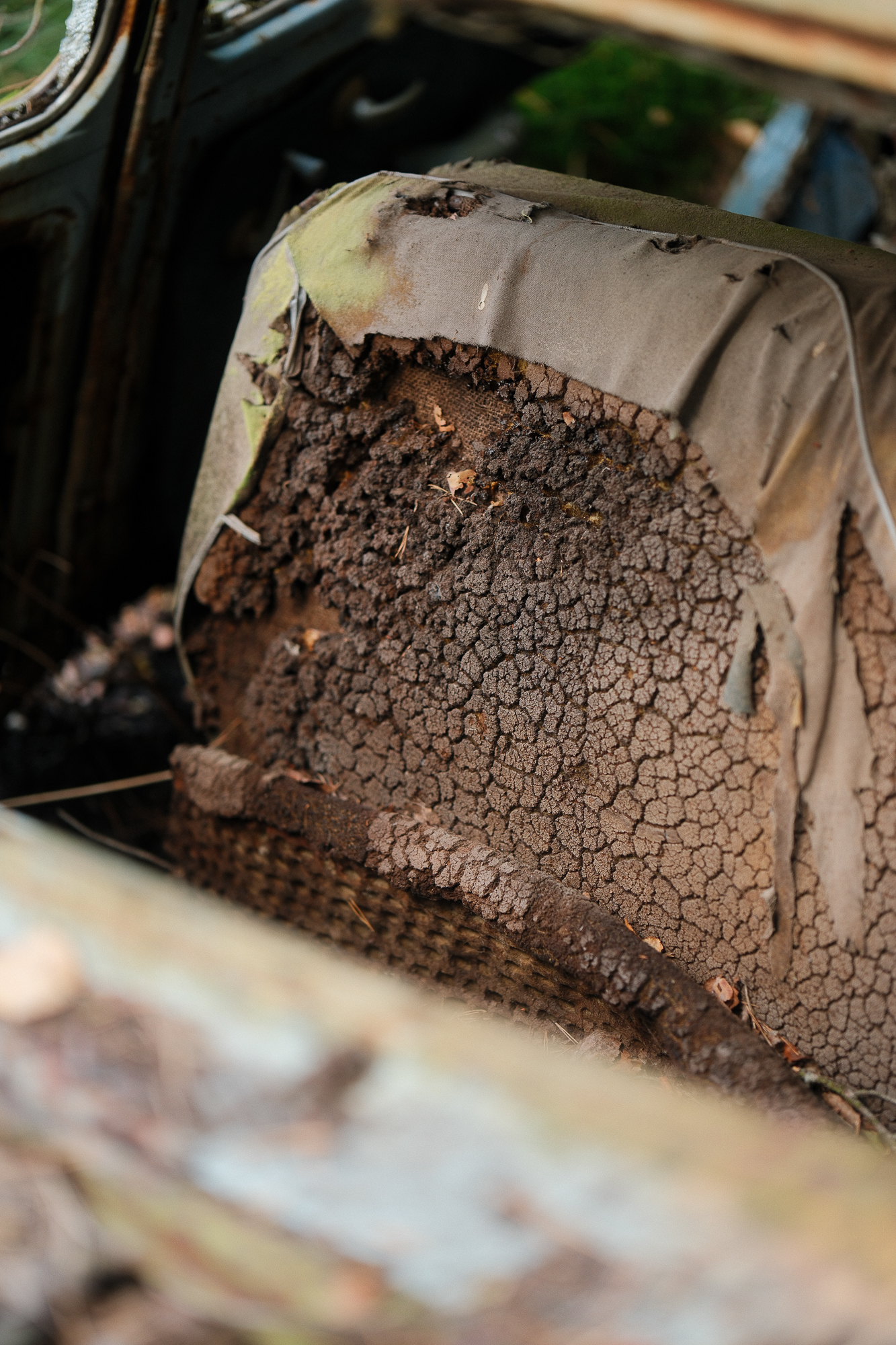
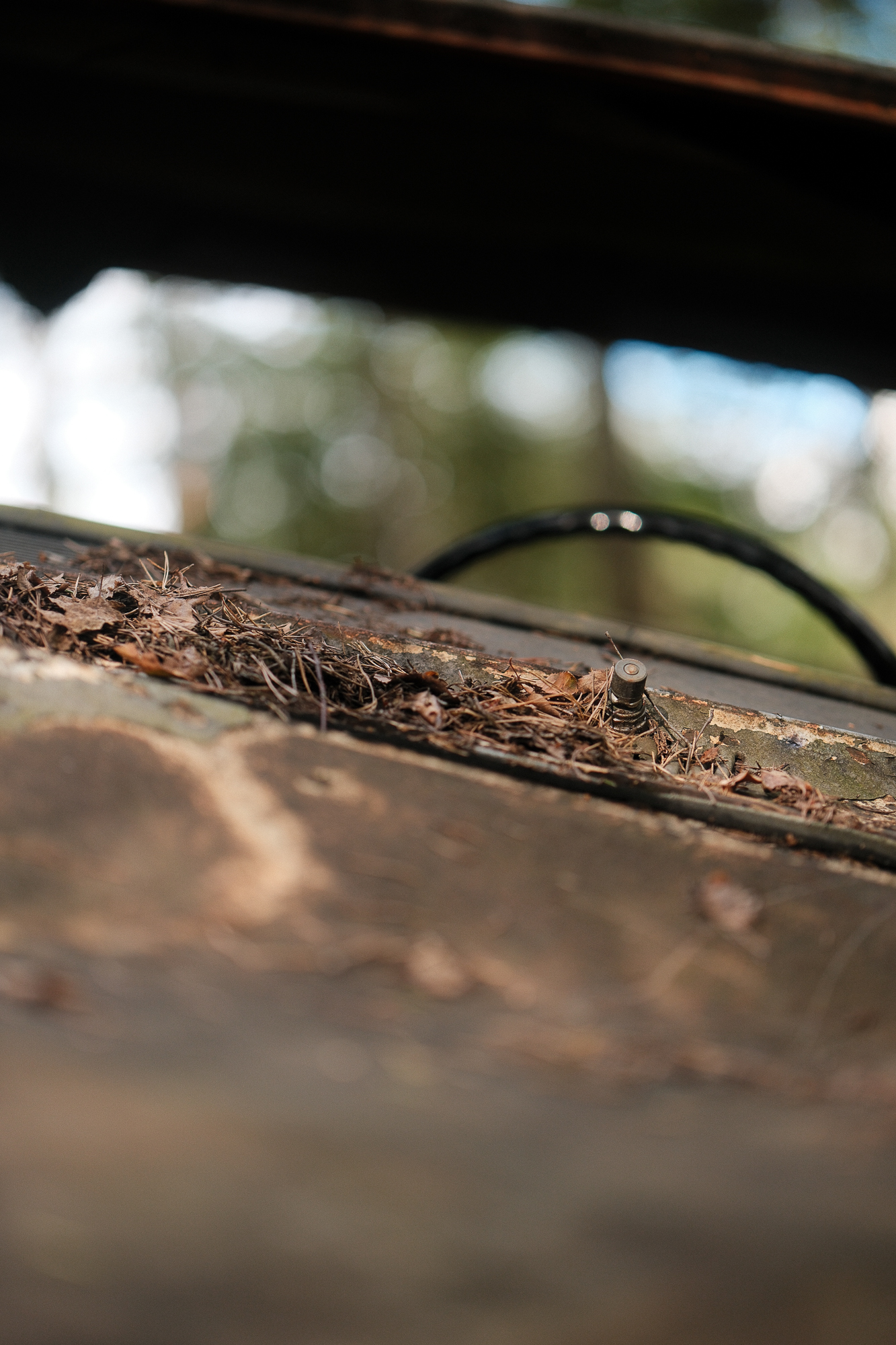
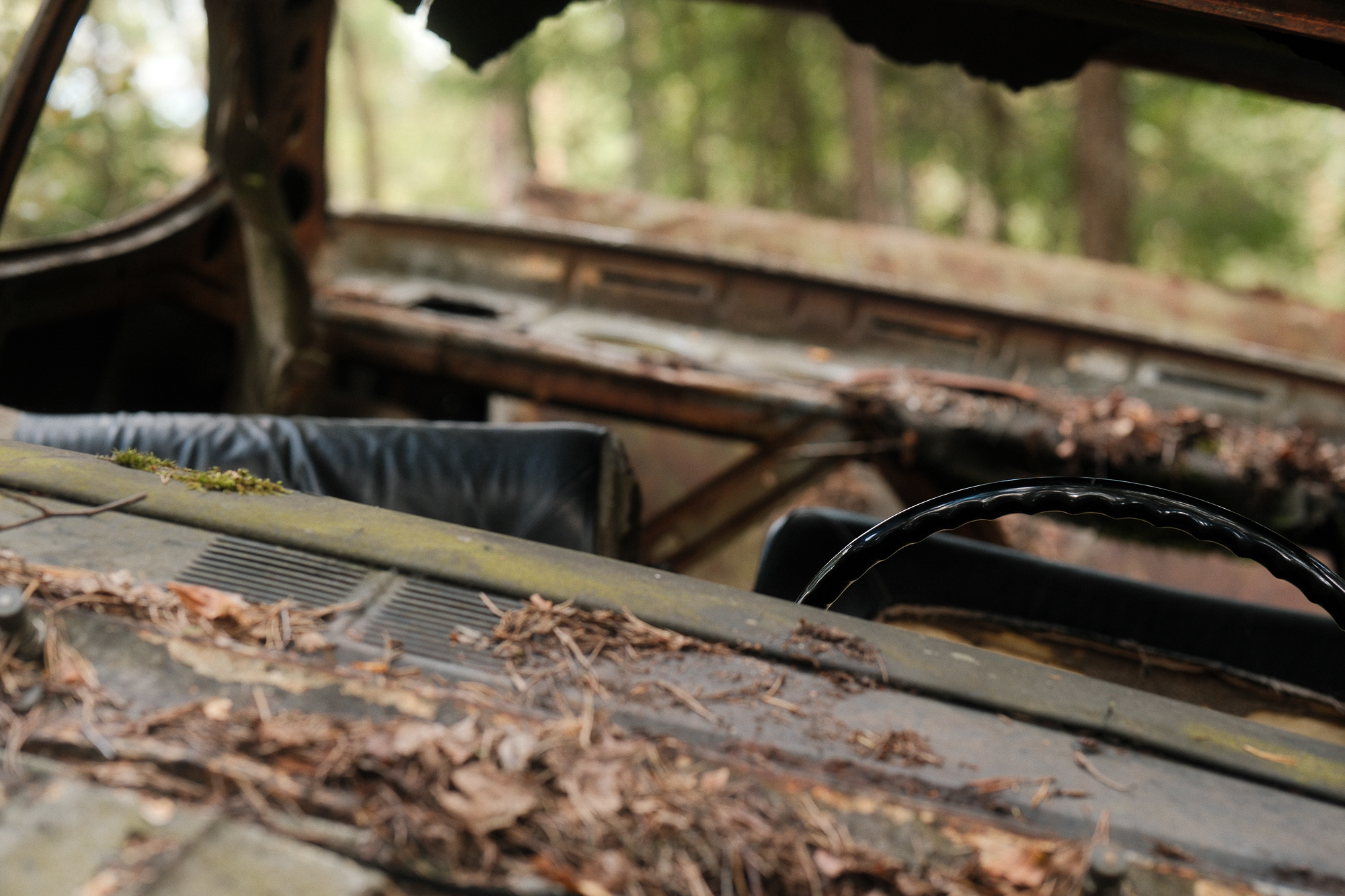
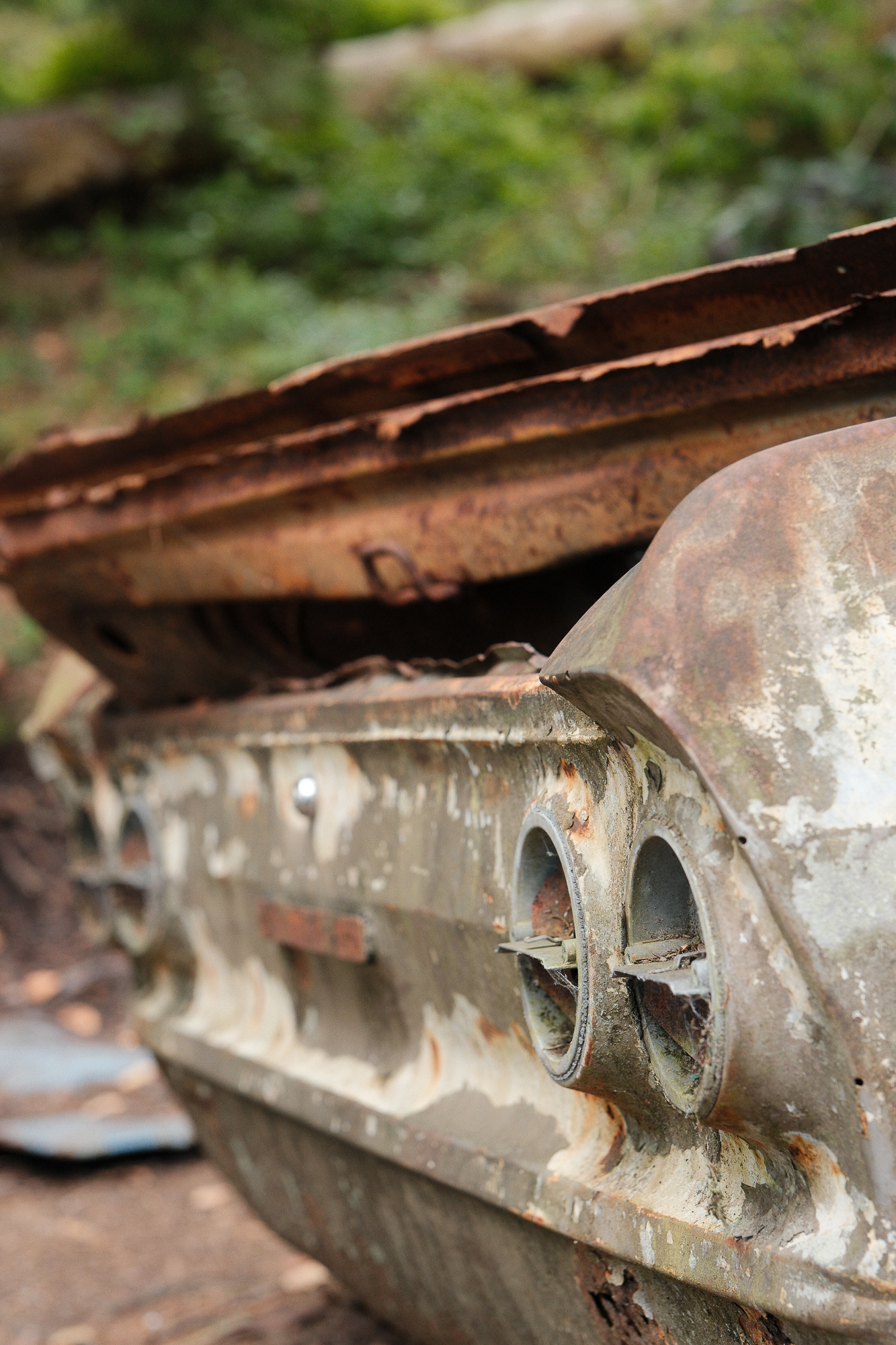
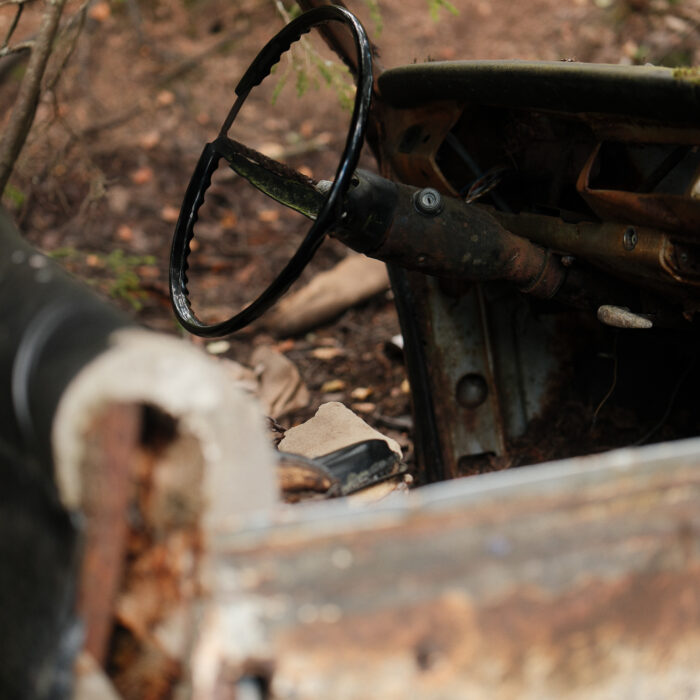
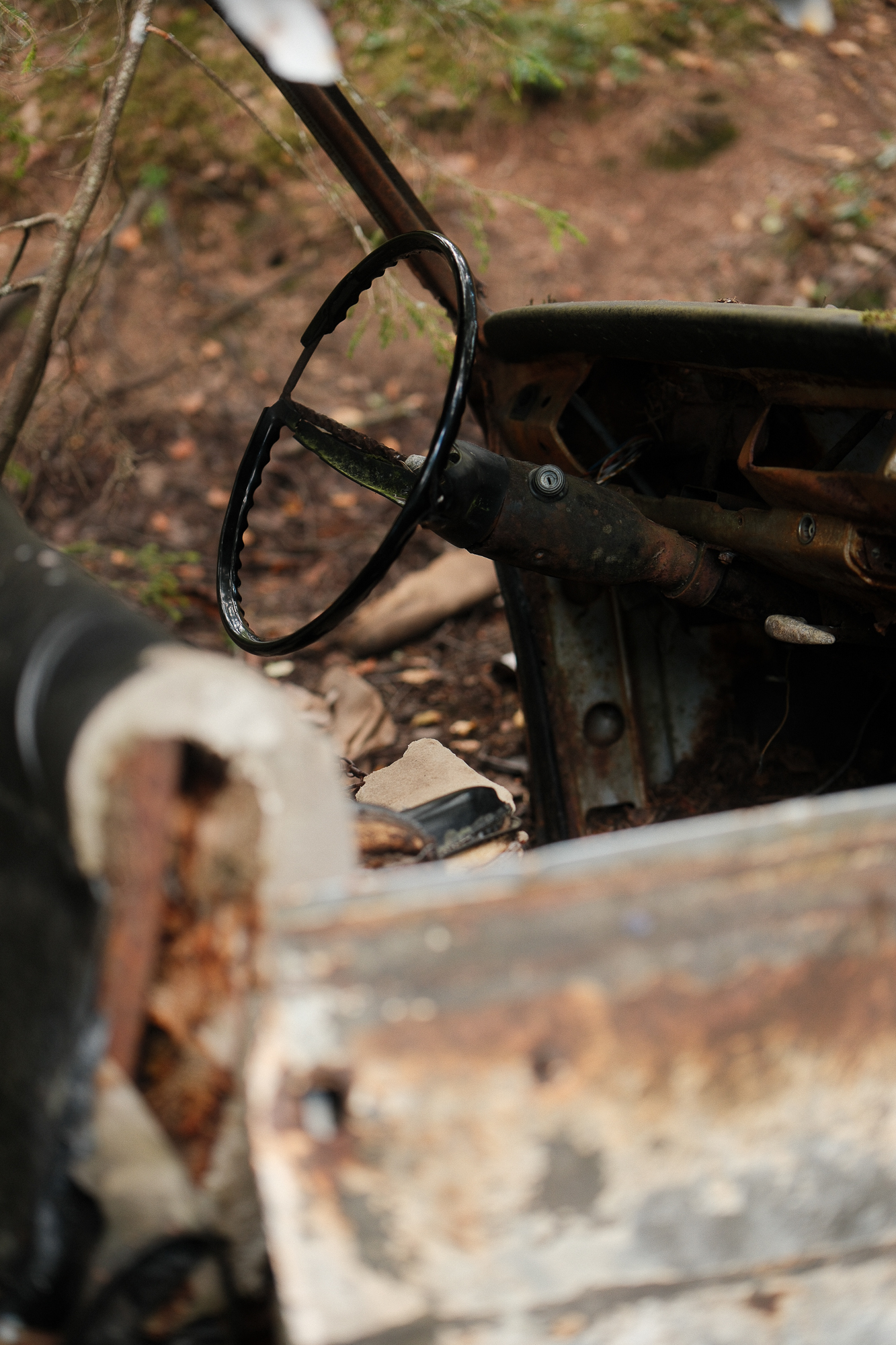
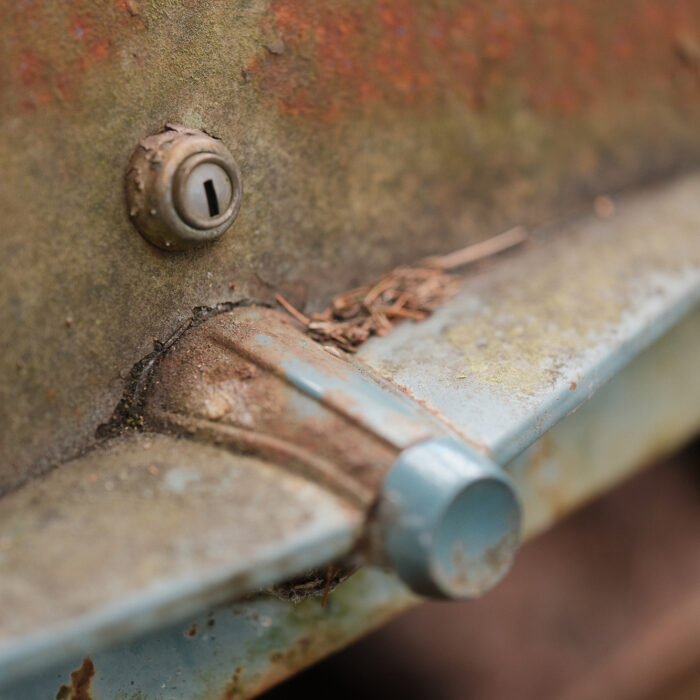
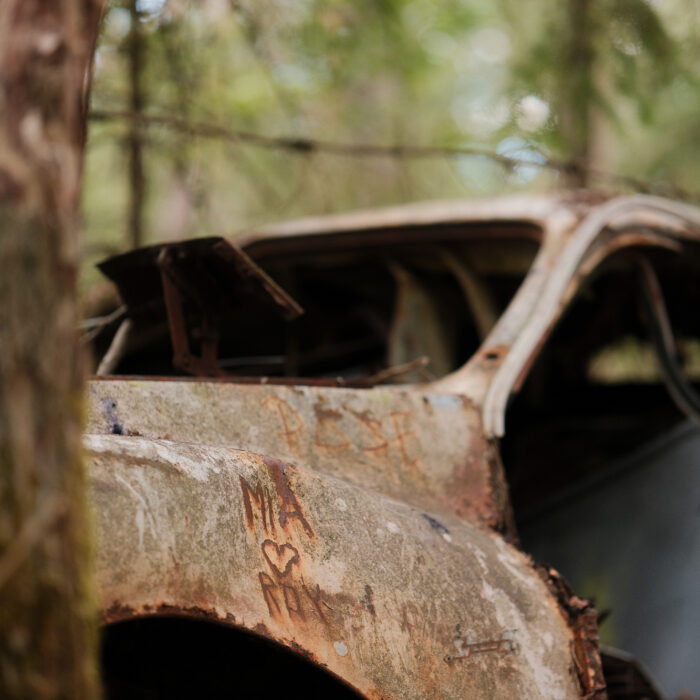
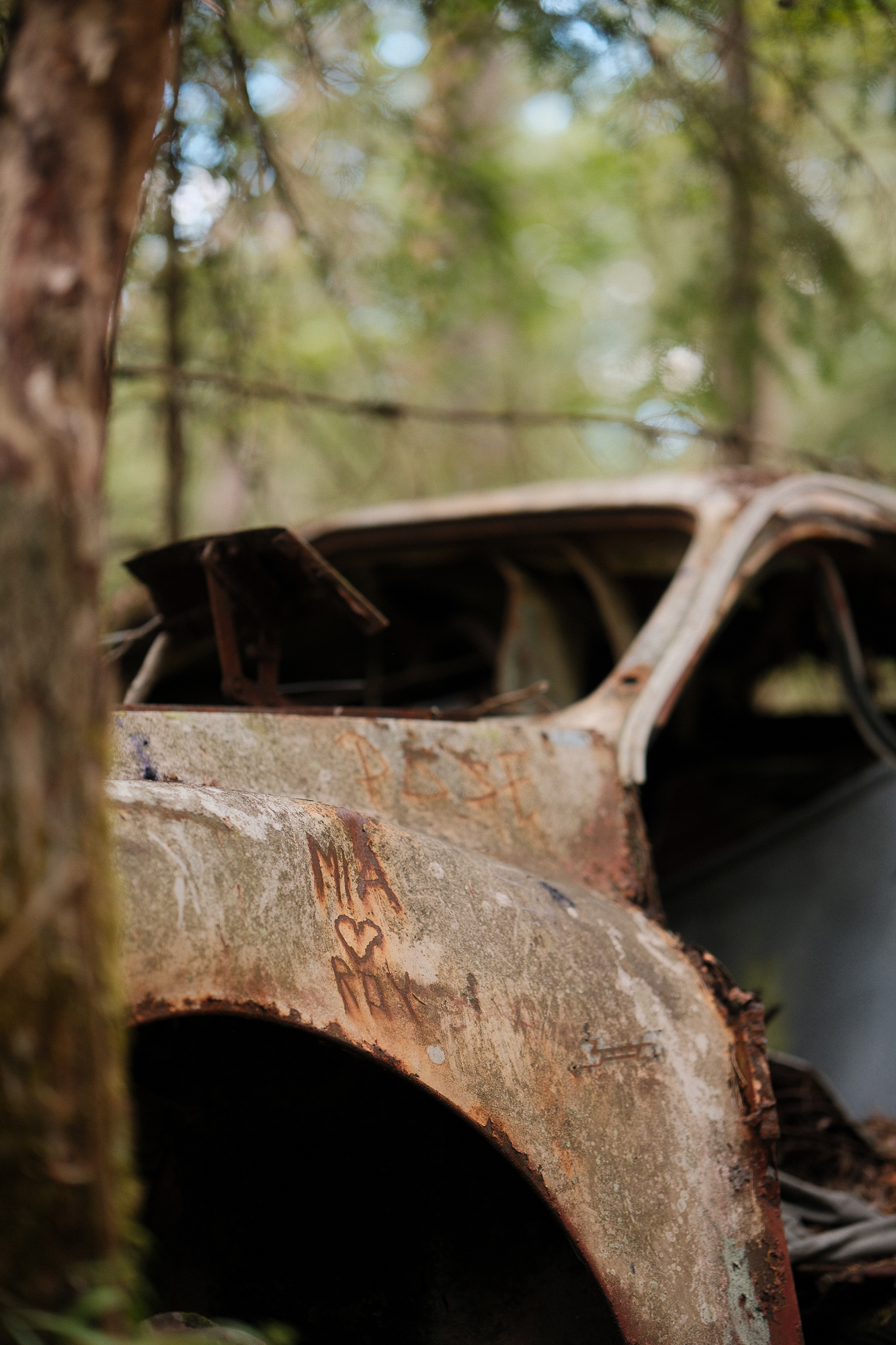
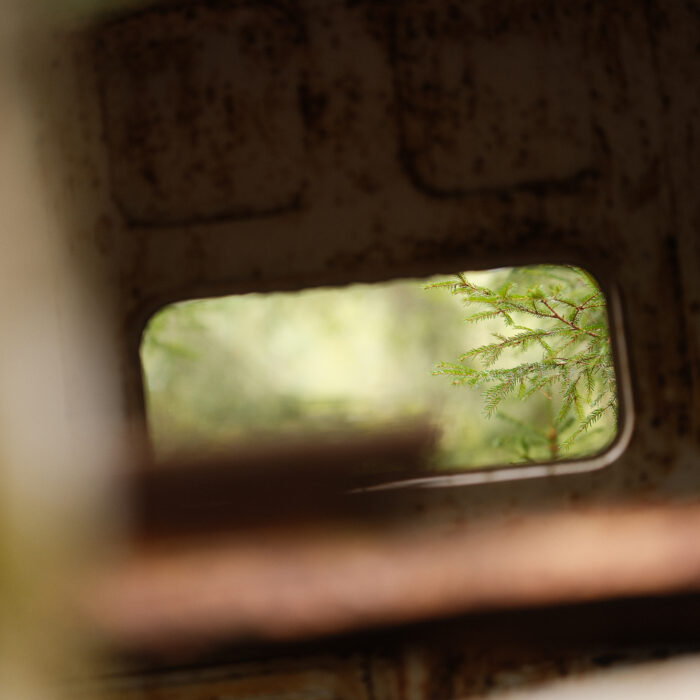
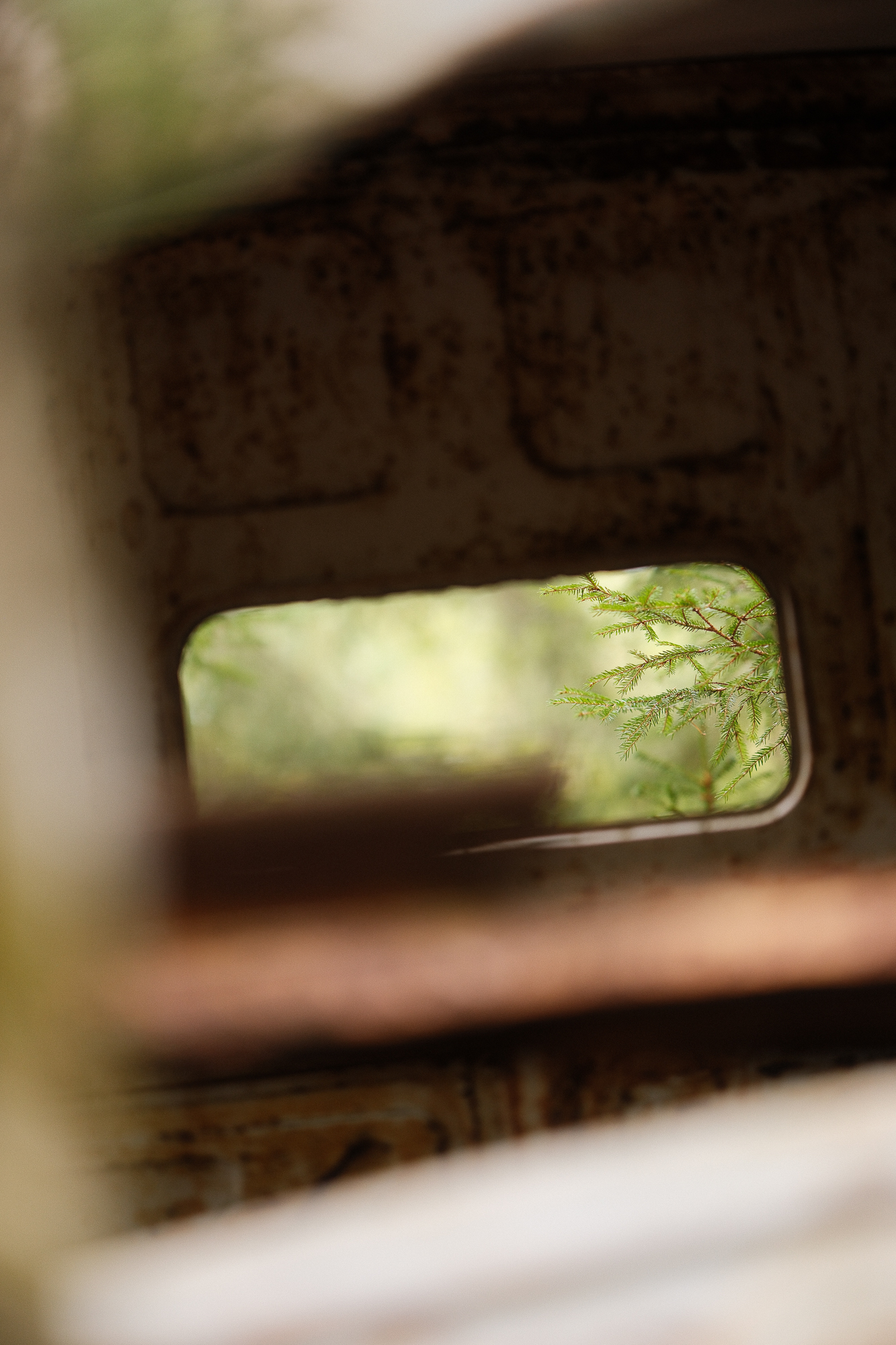
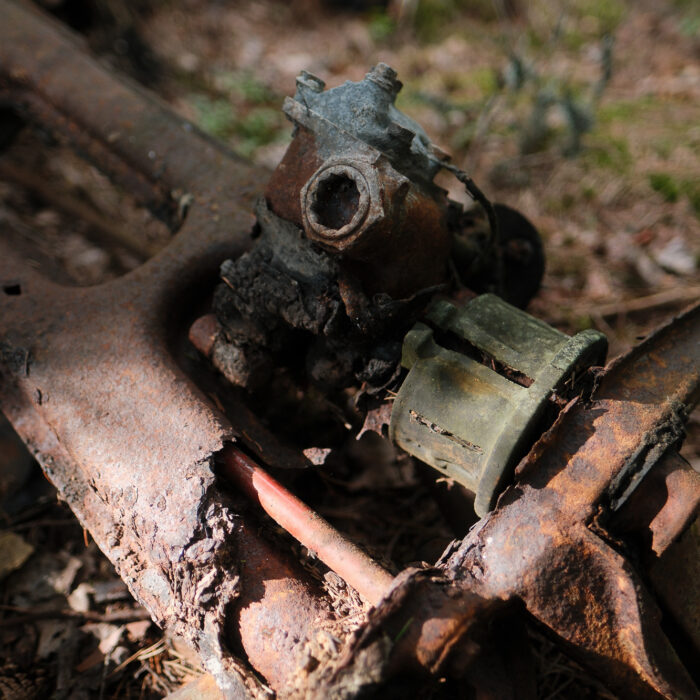
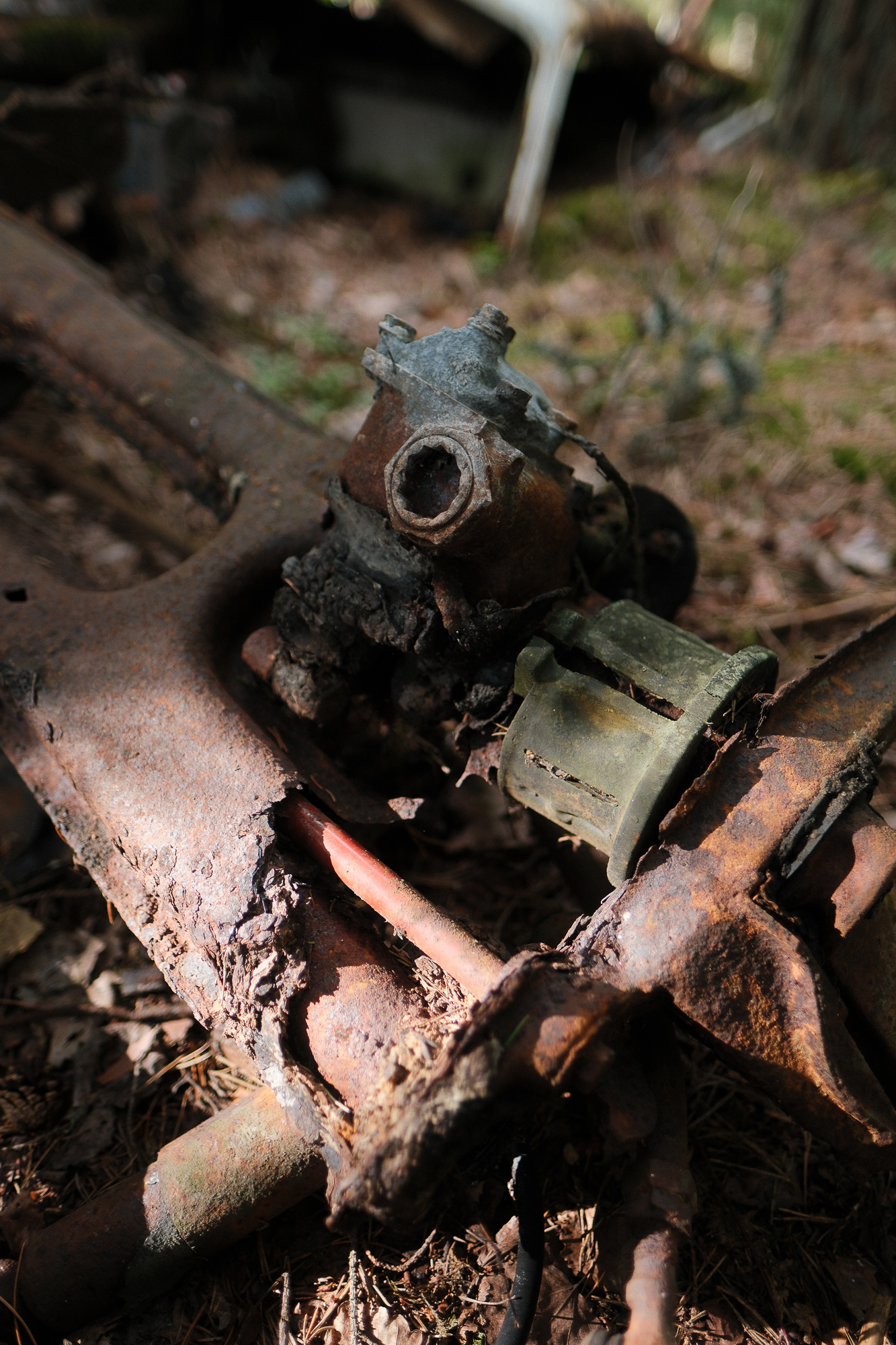
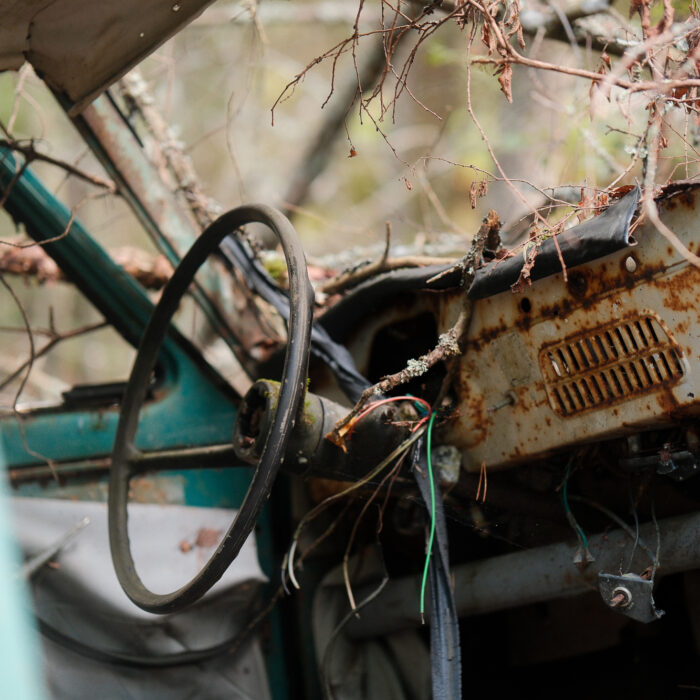
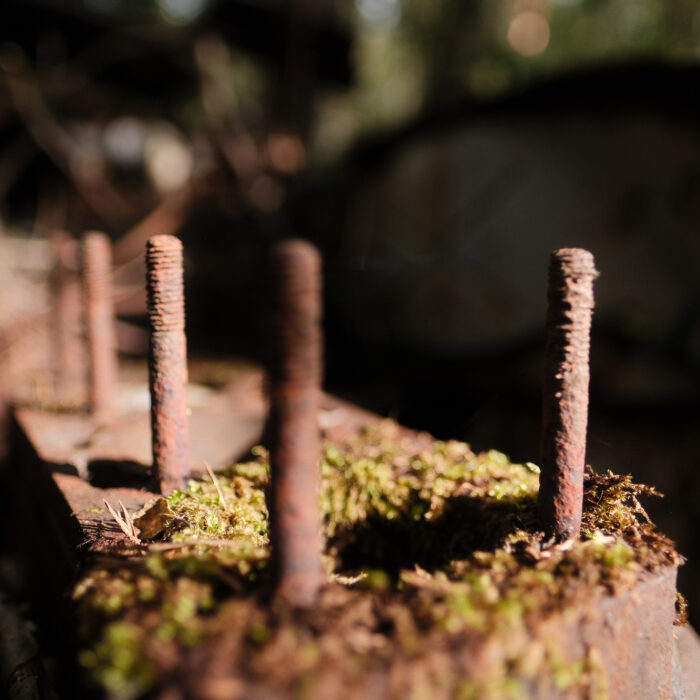
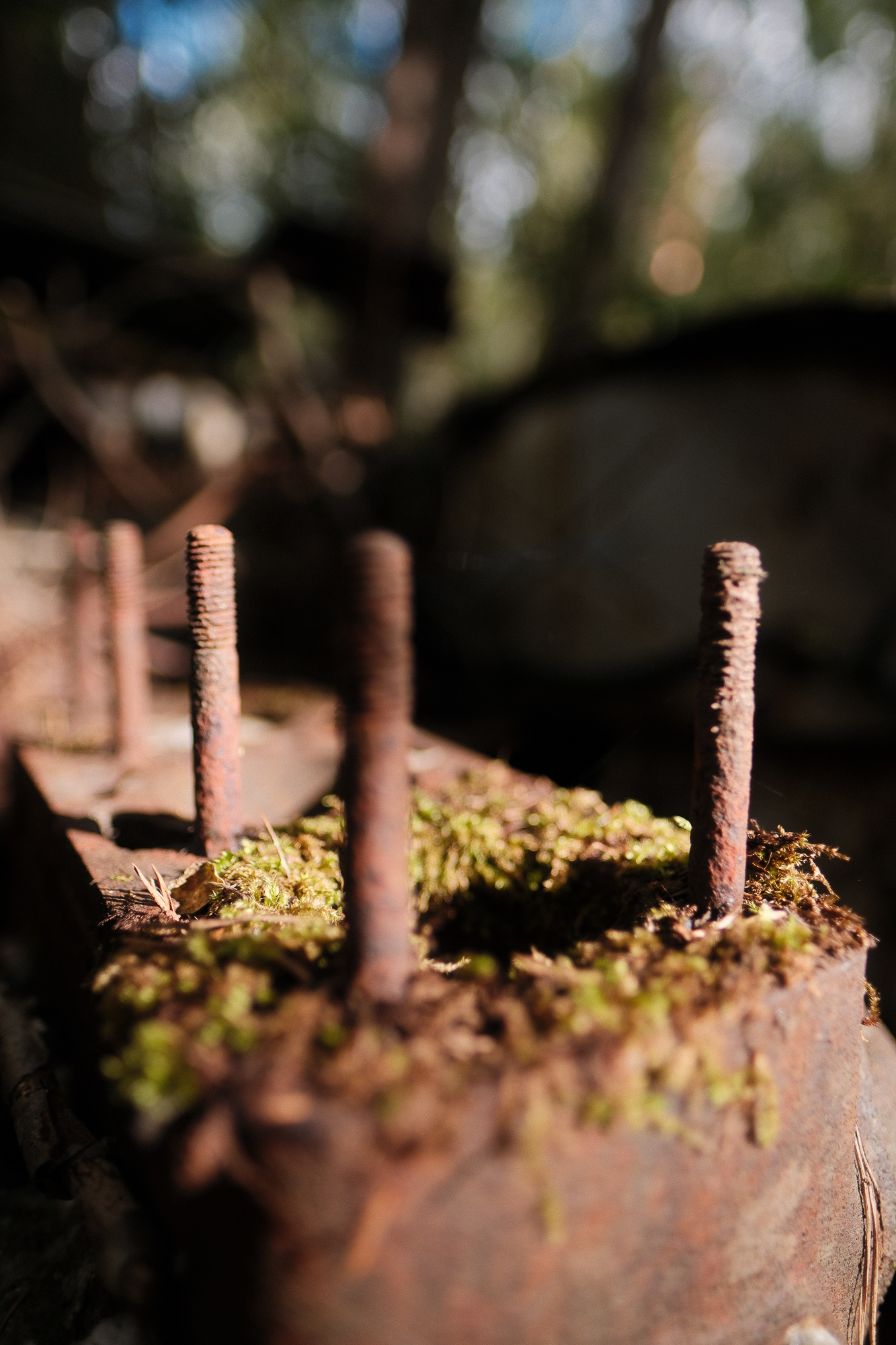
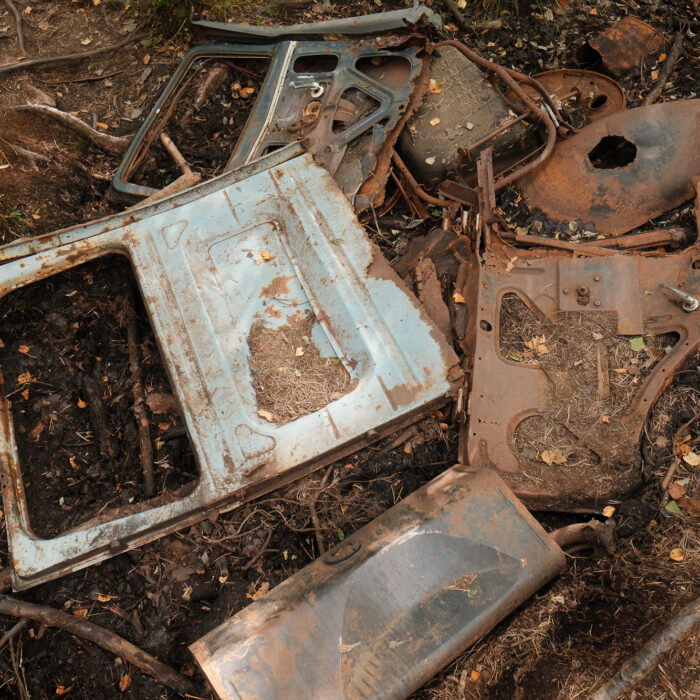
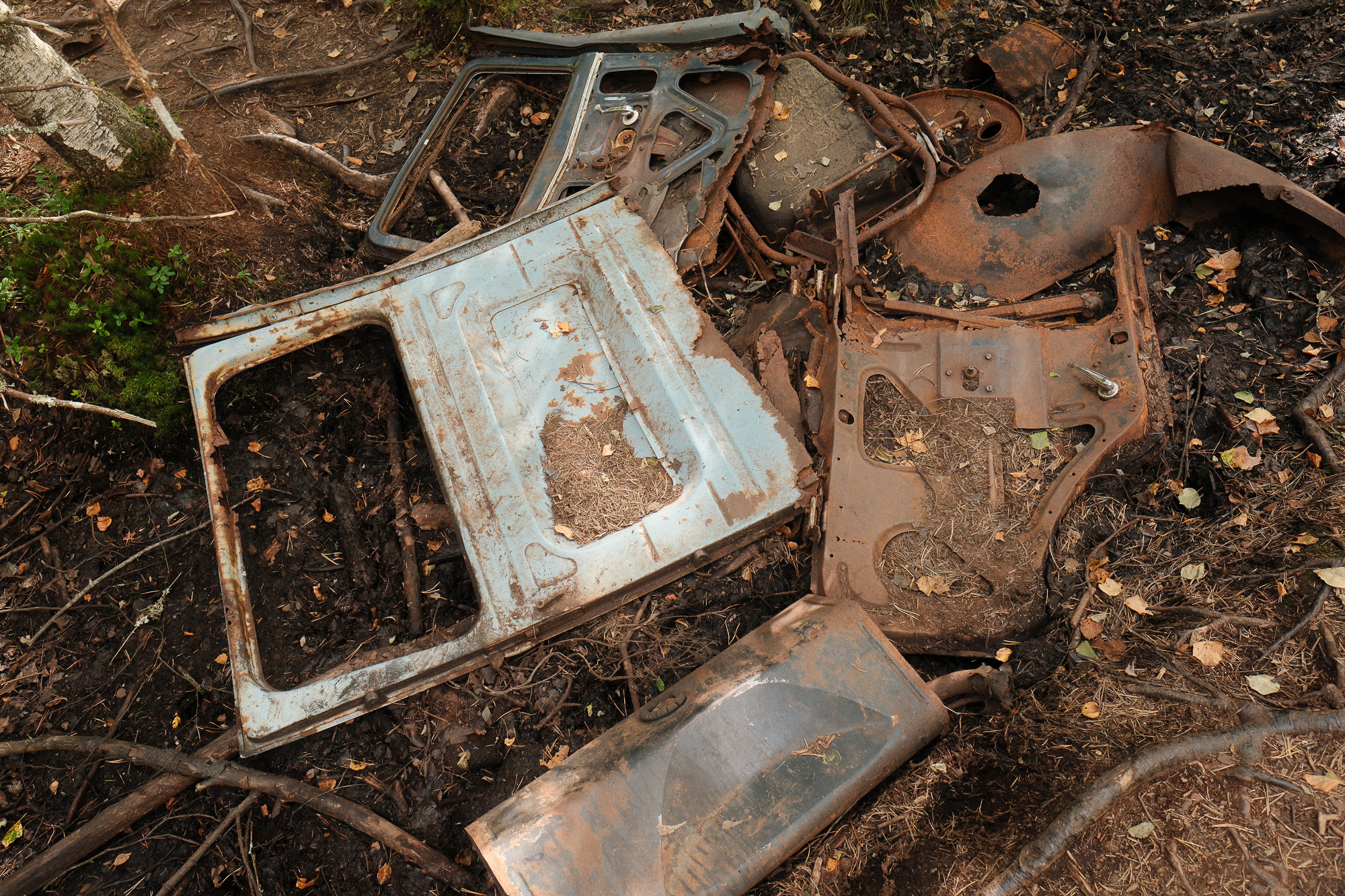
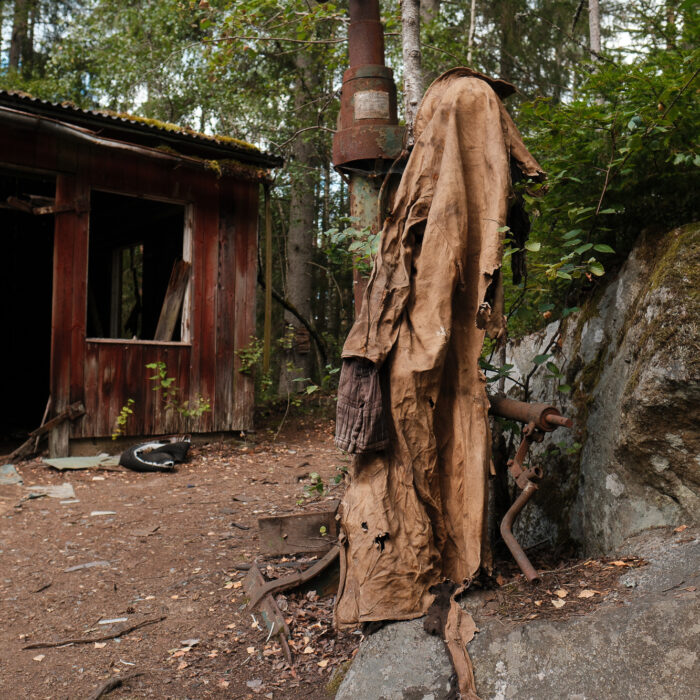
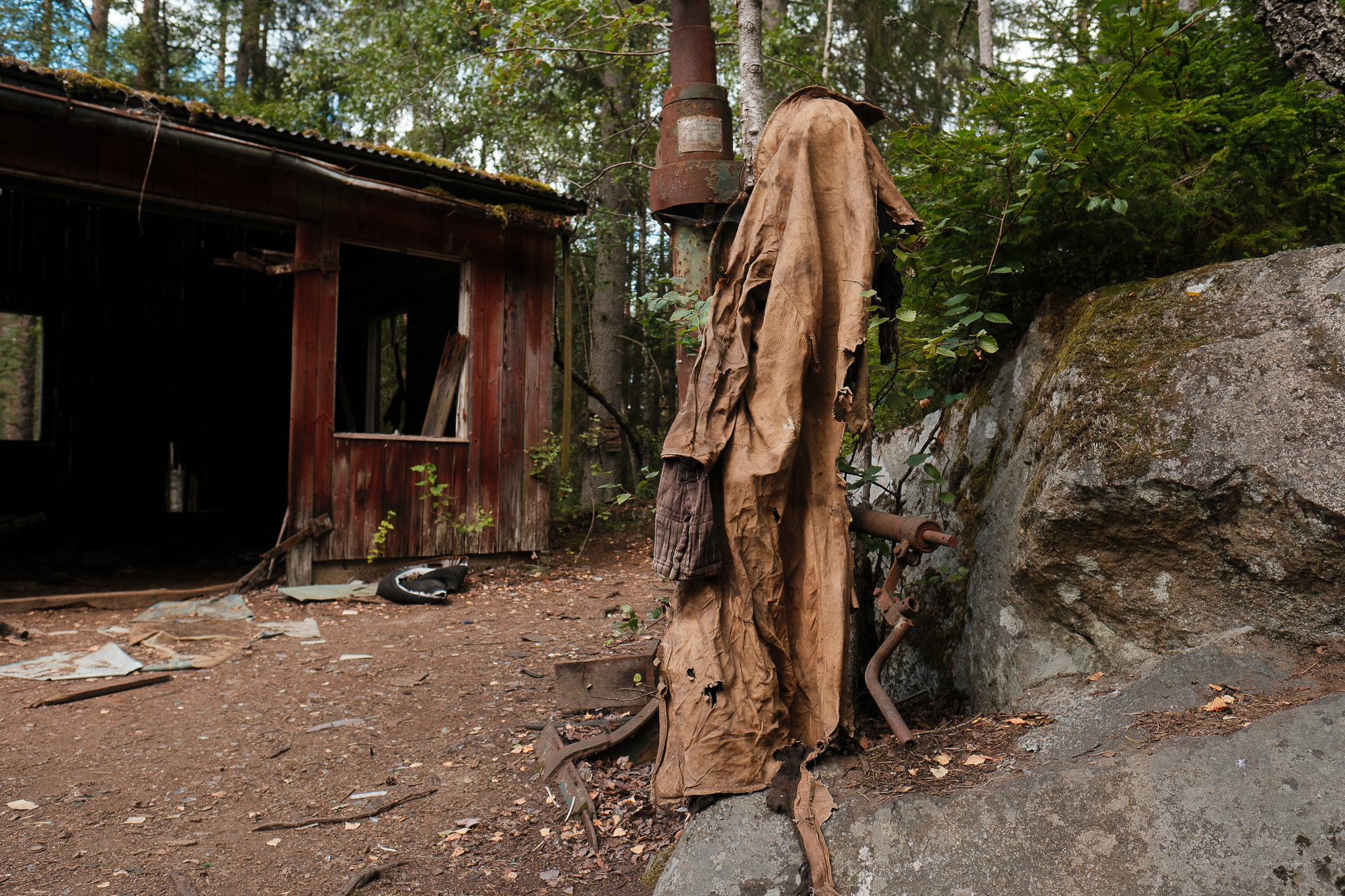
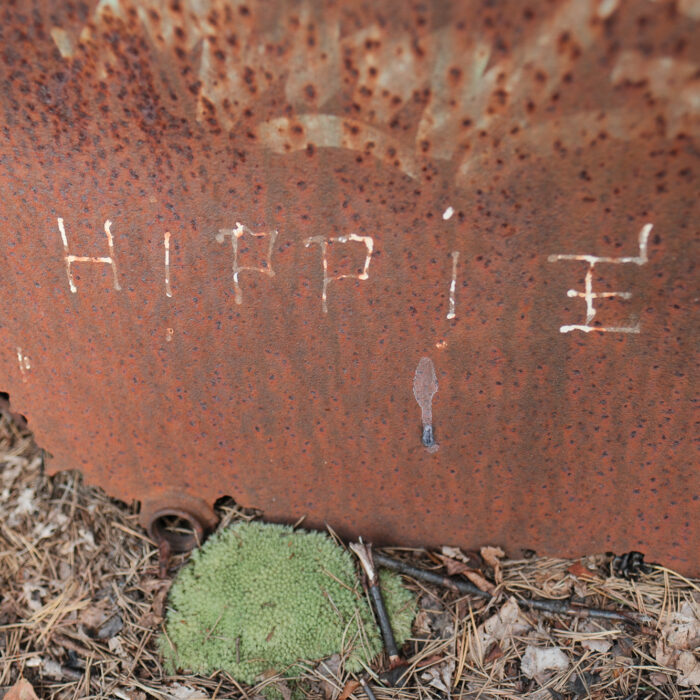
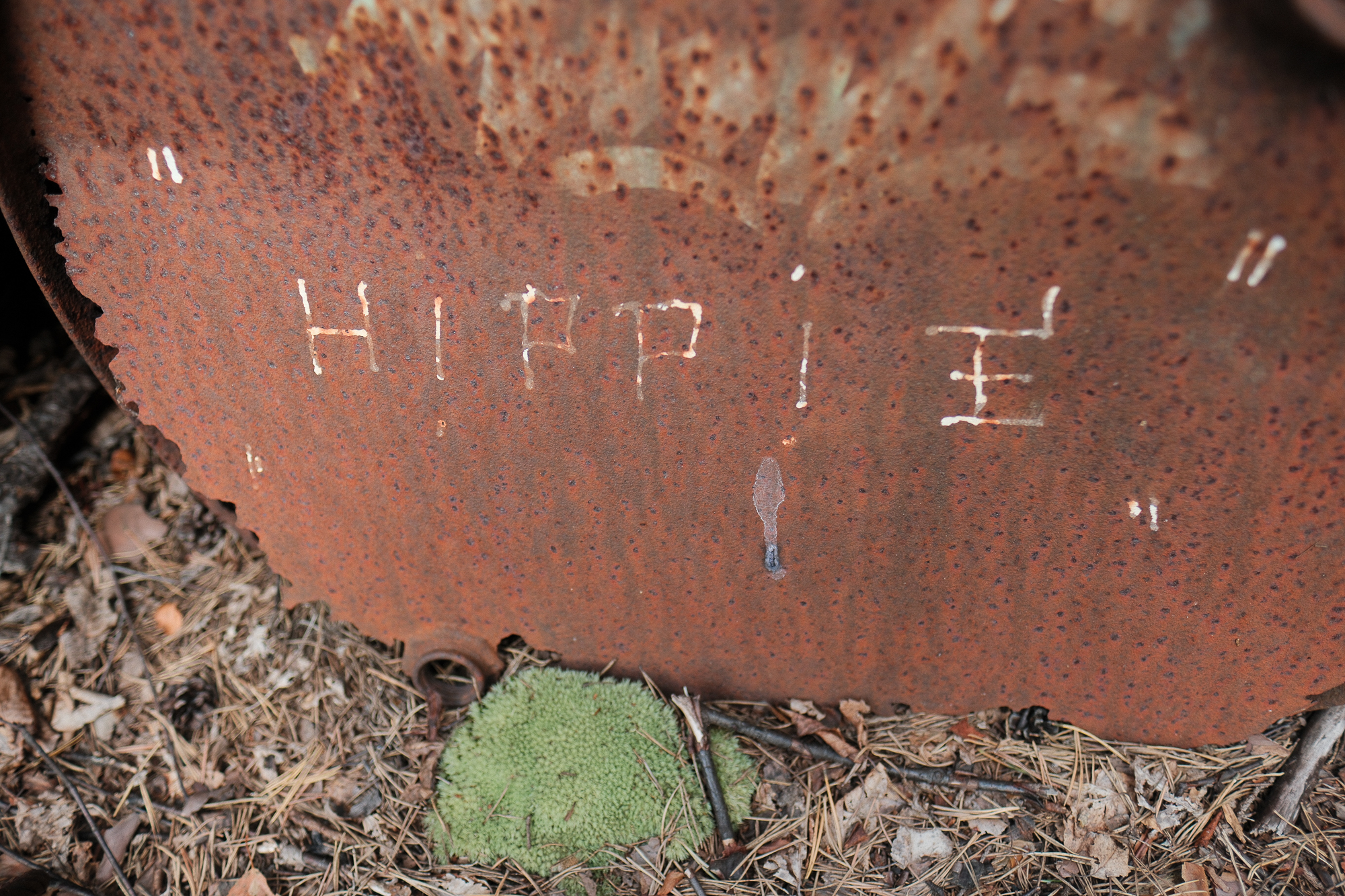
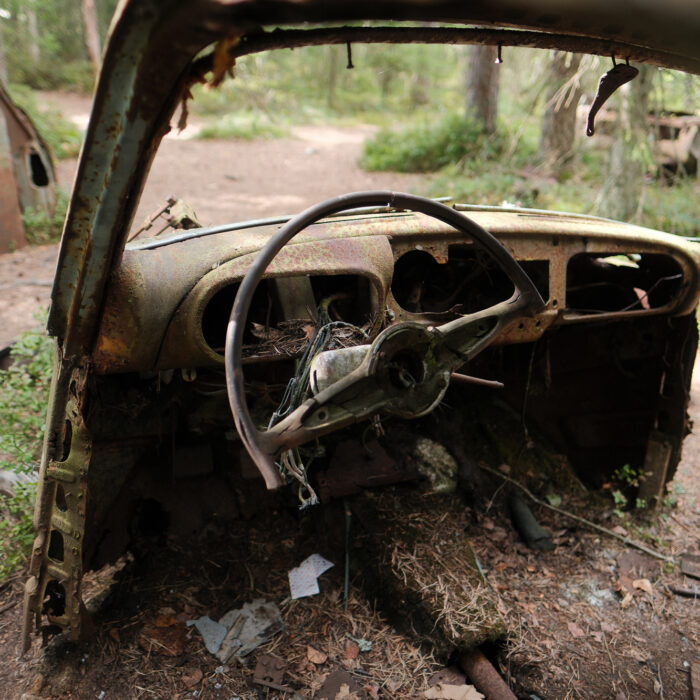
I ended up spending the entire afternoon there, without even noticing the time passing. It’s the kind of place that rewards slow movement. You take a few steps, and suddenly something catches your eye: a window frame eaten away by rust, a steering wheel sticking out of the ground like a fossil, a strip of faded blue paint glowing against the green.
Every corner invites you to stop, observe, and try to understand how the scene ended up looking exactly like that. There’s no order, no designed path, no panels telling you where to go. You just drift through it. For someone who enjoys photographing details, textures, and quiet spaces, it’s almost overwhelming. In the best possible way.
I could have stayed much longer. There’s a calmness to the place that comes from the slow collapse of things. It’s neither sad nor nostalgic—it just is. You’re looking at cars built to move, stuck forever in the same place. A kind of unintentional monument to the passage of time.
All the photos from this visit are straight out of camera. No editing, no corrections, no digital cleaning. Kyrkö Mosse doesn’t need embellishment. The colours are already there: the deep browns of rust, the saturated greens of the moss, the soft blues and reds from paint that refuses to die. Light filters through the trees in a way that feels natural and honest.
Shooting SOOC here made sense. It forces you to look harder, to pay attention to what the place is offering instead of what you can fix later. And honestly, the imperfect tones and shadows fit the subject better than any polished look would.
This visit was just one stop in a road trip through southern Sweden, but it’s the one that stayed with me the most. Not because of the cars themselves, but because of the atmosphere around them. It’s rare to find a location that feels so untouched by noise—literal and metaphorical. You walk, you observe, you listen. You take photos because not taking them feels wrong.
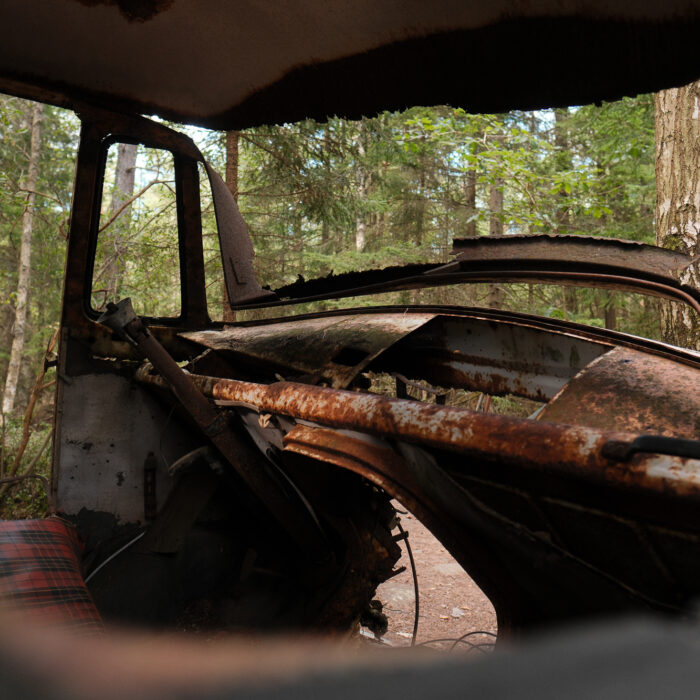
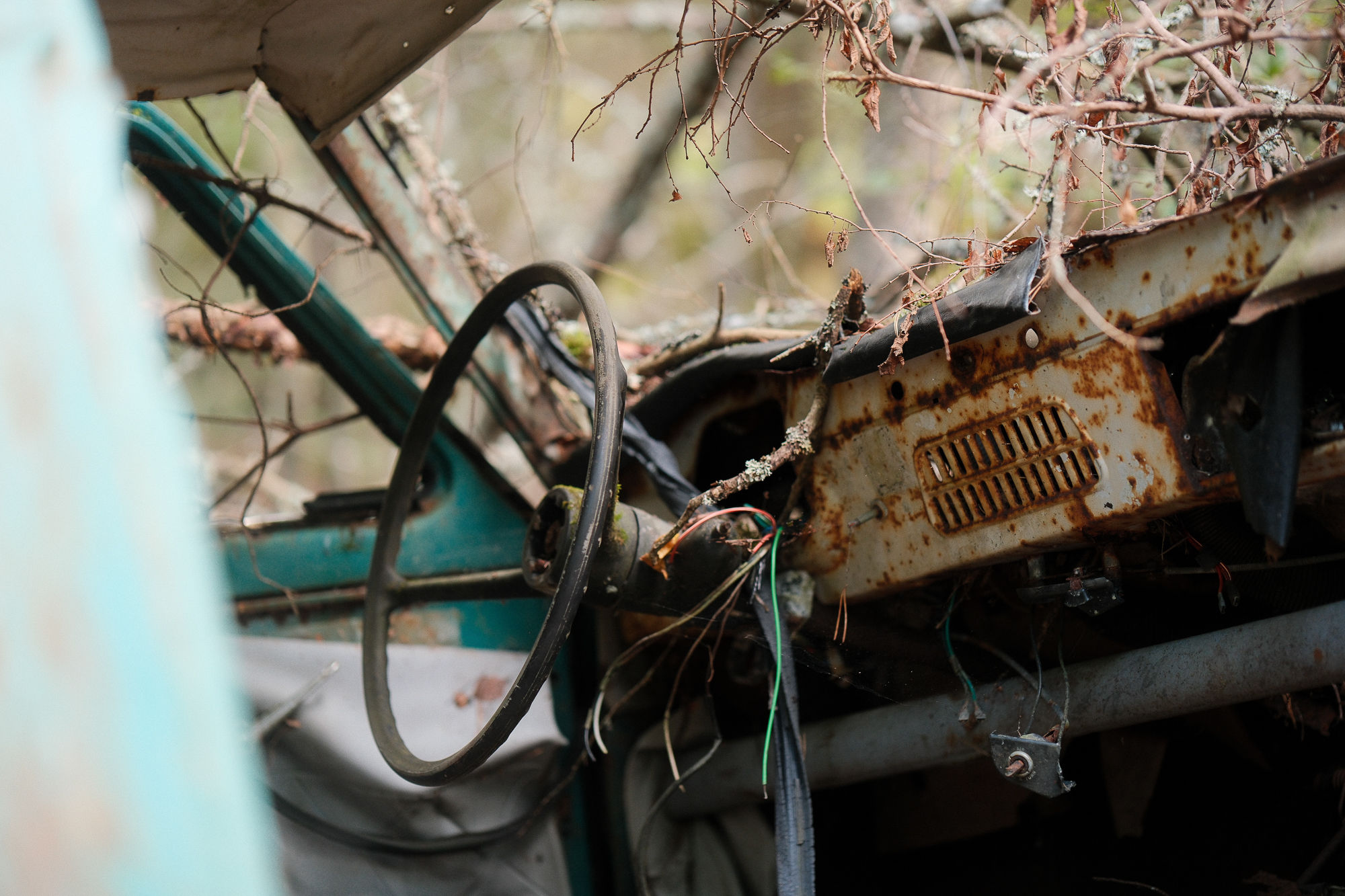
Kyrkö Mosse isn’t a spectacular place. It’s not a tourist attraction in the conventional sense. But it has something real. Something raw. A mix of human activity and natural reclamation that quietly insists you slow down and look properly.
And that’s what I did: one long afternoon, camera in hand, wandering through rust, roots and silence.
Lereyerté wasn’t just another punk show—it was a reminder that DIY, when done right, means care, intention, and community. I brought my camera, but more than that, I brought myself into a space built by people who live the scene, not just play it.
In a packed DIY venue in the Basque Country, Grade 2 tore through a no-frills set that reminded everyone what punk sounds like when it stays honest.